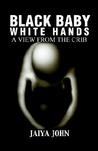
 Black Baby White Hands: A View from the Crib by Jaiya John
While this book was not easy for me to read, it was excellent and I think anyone who loves a good book would appreciate this memoir of a Black man's experience growing up in a White family, even if said reader is not a White parent to Black children as I am.
The author is very introspective and philosophical (which I mostly appreciate, although sometimes I get a little weary of the navel-gazing) and his prose is poetic without being annoying. I learned so much about racial identity and adoption identity by reading this book, and know I'll need to refer back to it repeatedly as I raise these children I've been blessed with.
- It was hard for me to read because he struggled so much and I hate the thought of my children having similar struggles. I do think a lot of his struggle came from his inherent personality: "I contained a genetic and spiritual predisposition to feel my emotions very deeply. Those emotions would last for hours and days. This shaped my moods, sensitivities, and responses to life. I thrived on quiet and calm, and on large doses of reassurance and reflection. Our house was usually filled with noise, chaos, tough-skinned emotional flow, and little pause or allowance for pensive silence. The contrast affected my attachment in ways that would persist" (37).
- It was hard for me to read because, like his parents, there are so many things I didn't think about before adopting Black children. "Theirs was an innocent simplicity. They wanted more children, the consequences of that possibility were not a thing they were designed to dwell upon or hold up life for" (297).
- "I didn't find my reflection anywhere I looked" (39) hurt my heart as I have been trying to adjust our life so that my children have "mirrors" of Black-skinned faces around them on a frequent basis. "The lack of secure and meaningful attachments to other African American people was a vacuum that bore a hole in the bottom of my self-esteem reserve" (50). I cringed as he and his brother tried to figure out how to be acceptably Black people in the midst of Whiteness. "He went hip, hard, and happy. I went bent, burrowed, and benign. We both lost ourselves along the way. . .Increasingly I smiled as a way of comforting others, letting them know I was friendly and not to be feared (105).
- As he described his developing radar for people's biases, I felt a nearly physical ache. Some people, even extended family members, accepted him "in spite" of his Blackness--because he was different from "those other Blacks". "My great grandfather saw no contradiction between his attitudes toward Blacks as a group and his feeling for Greg and me. This was a perceptual dichotomy that would prove one of my central sources of wounding. . .This was simply the shaded love of people who spent their lives distant from people who looked like me. Children can discern the subtle difference between embrace, ambivalence, tolerance, and disdain. Incongruent emotion was a great bane to me in most of my relationships. A person caring for me but feeling less than positive about a group of people that I held myself a part of never was good enough for me" (77). He wanted to be loved and accepted for who he was--as a Black boy. "More than unconditional love, or bountiful love, it was clean love that made the world of difference for me. The vibes weren't polluted with a discomfort with my race, an avoidance of the idea of my race, or a strained tolerance or forgiveness for my race. Crisp and clean, that's how I needed it" (53). "Now, I knew that I had not been crying out for my Blackness to be ignored. I just wished that it not be treated as such an alien, foreboding stain on my skin that it should not be mentioned. I had stood in the intense glare of spotlight not because I was different, but because of how people reacted to my particular difference" (288).
There were many, many other topics I benefited from in John sharing his story, even as they were uncomfortable and even a little scary for this adoptive mama. He fleshed out the dangers of professing colorblindness. He vividly painted the progression of White people's perceptions of him as a "cute little baby" to a "scary Black man." He shared techniques his parents could have employed to make it easier for him to grow up in a White family.
Points of contention include his worldview, as he concluded that Christ is for White people and embraced an animalistic, Native American-type of religion which he wove throughout his narrative. I also think he is incredibly self-absorbed. I genuinely hope that we will be able to raise our children with more of an "upward and outward" focus which might circumvent some of his focus on how challenging life is when transracially adopted.