Monday, March 30, 2015

A Passion for God: The Spiritual Journey of A.W. Tozer

A Passion for God: The Spiritual Journey of A. W. TozerA Passion for God: The Spiritual Journey of A. W. Tozer by Lyle W. Dorsett

I enjoyed this book very much.  Dorsett's writing style is easy to read and his details are thorough.  I read it while simultaneously reading The Pursuit of God by Tozer and I think this biography helped me to better understand and appreciate what Tozer was saying and where he was coming from.

Interestingly, I had never heard of Tozer's denominational affiliation, the Christian Missionary Alliance, until we moved here to Iowa three years ago.  The largest congregation in our local town is CMA, whose "biblical and theological foundation is: Christ as Savior, Sanctifier, Healer, and Coming King" (49)

I was intrigued by the identifier of Tozer as a "biblical christian mystic", a term I had never heard before.  I'm still not sure I completely understand what it's referring to, but it seems to have something to do with the understanding of how the Holy Spirit is manifested, particularly in healing and in speaking in tongues (80).  There was also some reference to mysticism merely referring to "existing in a world of spiritual reality" (156), which I take to mean a daily realization that we are spiritual beings temporarily inhabiting a physical body.

Regardless of my unfamiliarity with his exact theology, Tozer was thought highly of by people for many years as there were several quotes referencing his humility, his Bible study habits, his prayer life, his self-education, and his gifts for speaking and writing.

He was particularly well-known for his work with young people as "his goal was to encourage this younger generation to dig into the Word of God and partake of a deeper life with Christ through prayer that encompassed adoration and awe" (101).  College students flocked to hear him speak approximately 30 miles from Wheaton College  and Moody Bible Institute during his years preaching in Chicago.   "Tozer endeared students to himself because of his transparency.  He admitted that he was a flawed man and was not reluctant to mention his own shortcomings. . .It became apparent to students that Tozer truly knew Jesus Christ rather than just knew what the Bible recorded about Him" (103).

While Tozer spent much time discipling young people and in intimate prayer to God, he was not intimate with his wife or children, particularly his sons.  There were multiple references to him being emotionally distant and making life-changing decisions for his family without any discussion with or consideration of his wife.  "My husband was so close to God, a man of such deep prayer, always on his knees, that he could not communicate with me or our family.  No one knew what a lonely life I had, especially after the kids left home" (144).

A few people didn't appreciate Tozer's discernment and warnings about changes in church practices, but others "recognized that he had been called to be an Ezekiel to the twentieth-century church" (146) as "he admonished Christian leaders for their drift toward worldliness manifested in growing practices of adopting leadership models from the business world for the church and for allowing various forms of entertainment to take the place of biblical preaching, teaching, and theocentric worship" (18).  I daresay we can still observe these criticisms today.

Regardless of some criticism of  his style being "sometimes abrasive, and his well-meaning directness hurtful to sensitive souls" (146), the consensus remained that "Tozer's messages--whether written or spoken--caused people to thirst for Living Water, hunger for the Bread of Life, and even desire to read books and enlarge their vocabularies.  Tozer's ministry at once illumined minds and warmed hearts.  In the final analysis, those who imbibed Tozer's fare were spiritually enlivened and hungry for more of Jesus" (112).

I highly recommend this biography to anyone who is interested in learning more about Tozer or is curious about his works.  It has made me want to read another book by Tozer at some point, probably The Knowledge of the Holy:  The Attributes of God:  Their Meaning in the Christian Life.

Sunday, March 29, 2015

March 2015 Nightstand Report

I am happy with what I accomplished in my reading this month as I learned a lot.  Here were my goals (linked to reviews where applicable):
  • The Pursuit of God by A.W. Tozer was my selection for Carrie's Classics Book Club.  This was also one of the books on my list of books I want to read in 2015.  I finished it and got a lot out of it, even as it wasn't the easiest book I've ever read.  I hope to post my review this week, and we'll be discussing it on Carrie's blog this week as well.
  • The Other Wes Moore:  One Name, Two Fates by Wes Moore.  I really, really liked this memoir about two Black men raised in the same area in the same time period with the same name and many similar circumstances who took two different paths.  I highly recommend it.
  • Flight Behavior by Barbara Kingsolver.  Kingsolver is a good storyteller, but this one didn't measure up to The Poisonwood Bible and I still don't agree with her worldview.  As usual, however, she made me think, so I'm glad I read it.
  • Great Expectations by Charles Dickens.  I was hoping to start this classic with my son for literature this month, but we both had many commitments so I wasn't sure we would get to it.  We didn't, but we cleared our calendar for it so we can look forward to it next month.
  • Raising Real Men by Hal and Melanie Young (from my TBR Pile Challenge).  I am halfway finished with this book and anticipate finishing it next month.
Additional books I read this month included:
  • Orange is the New Black by Piper Kerman which was an interesting memoir about a WASP's time in prison.  I wasn't crazy about the narrator, but I did find the book rather interesting.
  • One Plus One by Jojo Moyes was "escapist fiction" and I enjoyed its lightheartedness even as it discussed a couple of themes I found worth pondering.
  • A Passion for God:  The Spiritual Journey of A.W. Tozer by Lyle Dorsett.  I read this biography alongside The Pursuit of God and thoroughly enjoyed it. I would highly recommend it to anyone who has any curiosity about Tozer's life.  
What's On Your Nightstand

In April I hope to read:
  • Great Expectations by Charles Dickens with Destry for literature
  • Raising Real Men by Hal and Melanie Young (finish)
  • 1984 by George Orwell (for Carrie's Classics Book Club)
And depending on time, maybe one or both of these from my "To Be Read" Pile Challenge:
  • Little Heathens:  Hard Times and High Spirits on an Iowa Farm During the Great Depression by Mildred Armstrong Kalish.  Kristy keeps talking about how much she enjoyed this one, and she's only let me down once. . .(Jasper Fforde, cough) :)
  • Dumbing Us Down by John Taylor Gatto.  I'm in my 14th year of homeschooling and I've never read this book.  How can I truly qualify as a homeschooling mom without having read it?

Friday, March 27, 2015

The Book Club Assignment

I'm hoping to write a series of posts about my experience in reading my first book by A.W. Tozer.  My friend, Carrie, hosts a book club on her blog and asked me to host a month.  Here is the blurb I wrote at the beginning of March describing why I chose to read The Pursuit of God and inviting others to read along.

I chose the christian classic The Pursuit of God by A.W. Tozer for this month because I have intended to read it for years, and have just never gotten around to it. I thought the accountability of reading it with others for a book club might help me actually accomplish this goal.


Like Paul, I want to know Christ and the power of his resurrection. I am good at knowing about God from what He reveals about Himself in His Word, but how well do I really know God? I have long heard admiration for Tozer's devotion to following God and leaving worldly things behind and I think there is much I can learn from his writings about developing a closer relationship with my Lord. 

I have also heard that he didn't have much formal education, but educated himself and I am always inspired by self-taught people. 

I have to admit I'm also a little intrigued about his biography, A Passion for God, which indicates he was so focused on ministering to others that he might have neglected the mission field of his own family consisting of his wife and seven children. If I have time, I may have to read both books.

Stay tuned for my thoughts on both books!

Thursday, March 26, 2015

One Plus One

One Plus OneOne Plus One by Jojo Moyes

I didn't really like the other book I read by Moyes, Me Before You, but I enjoyed this lighthearted escape (and I've been looking for a fun escape, rather unsuccessfully before now).  After a rather challenging morning homeschooling my children (someone exchanged my relatively well-behaved children for some monsters this week), I escaped into this book during naptime and didn't come out until after my husband had grilled supper.

One Plus One reminded me that my challenging days aren't really so challenging when set beside a single mom of two desperately trying to make ends meet, while one child is being bullied and the other is a genius with math but they can't afford the specialized training her gift needs.

I most appreciated two themes in the book:

1) Normal is highly over-rated.  "Everyone I've ever met who was worth knowing was a bit different at school.  You just need to find your people" (145).  School is simply different from real life.  In the adult world, people's unique abilities and personalities are celebrated and lead them to their own brand of success.  In school, however, like in a herd of animals, those who are different are targeted by the rest of the pack.

2) "Rich" is a matter of perspective.  To one of the main characters in the story, he was merely "well-off" but not rich.  To a person struggling just to put food on the table, however, he was rich.  It reminds me that I am rich.  Instead of comparing myself to those who live in extreme luxury, I need to appreciate that "rich is paying every single bill on time without thinking about it.  Rich is being able to have a holiday or get through Christmas without having to borrow against January and February.  Actually, rich would be just not thinking about money all the bloody time (how to get enough of it to get through another week)" (135).

Tuesday, March 24, 2015

Chore Packs Revisited

I have problems with consistency.
We've used the chorepack system by the Maxwells quite successfully in the past.  The children wear their little pack filled with individual cards for each chore until all chores are completed.  It helps the kids to have a clear directive of what to do, and it helps me not to have to nag remind them again and again.
But we had neglected the chore packs the first semester of this school year.  With the new year, the new semester, I revamped their chore packs and determined to reinstate this wonderful routine.
It has been working splendidly for nearly three months now!  No more reminding kids to brush their teeth or hair, no more asking someone to sweep up after a meal, no more sending someone to get the mail, unload the dishwasher, or wash the dishes.
They retrieve their chorepacks after breakfast and again after lunch and complete their assigned tasks.  They love to work--kids really do.  They love to contribute to the family, to feel needed, to have a sense of accomplishment for a job well done.
I'm going to try really hard not to fall off the wagon again.  This house is running so much more smoothly with chorepacks in place!

Wednesday, March 18, 2015

Orange is the New Black

Orange Is the New BlackOrange Is the New Black by Piper Kerman

Since someone I love very much spent about a year in prison several years ago, I thought this book would be interesting.  And parts of it were.

One of my favorite parts of this book was her many references to "prison cooking" because it brought back light-hearted conversations we had about prison cooking as I walked through this experience with my loved one. "Extracurricular prison cooking happened primarily in two communal microwaves that were placed in kitchenette areas between the Dorms. . .Remarkable concoctions came out of those microwaves, especially from homesick Spanish and West Indian women" (81).  I guess that is a common experience.

Other parts of the book made me ache as I realized more fully what the experience was like for him, and as I realized ways I maybe could have been more supportive. I think it's just impossible for anyone to understand this experience, or how they can be most helpful, without having gone through it themselves.

  • "Prison is so much about the people who are missing from your life and who fill your imagination" (107).
  • "My family, my friends, my coworkers--these good people had all refused to abandon me despite my rotten, wild, reckless behavior all those years ago and my I-am-an-island-fortress method of dealing with my problems.  Maybe, because all these good people loved me enough to help me, maybe I wasn't quite as bad as I felt.  Maybe there was a part of me that was worthy of their love" (29).
  • "The truth is, the prison and its residents fill your thoughts, and it's hard to remember what it's like to be free, even after a few short months.  You spend a lot of time thinking about how awful prison is rather than envisioning your future.  Nothing about the daily workings of the prison system focuses its inhabitants' attention on what life back on the outside, as a free citizen, will be like.  The life of the institution dominates everything.  This is one of the awful truths of incarceration, the fact that the horror and the struggle and the interest of your immediate life behind prison walls drives the 'real world' out of your head.  That makes returning to the outside difficult for many prisoners" (124).
  • "The fact that I'd become used to life in prison shocked my friends and family, but no one on the outside can really appreciate the galvanizing effect of all the regimented rituals, whether official or informal. . .Where you fit in and how comfortable you were willing to get depended on the length of your sentence, the amount of contact you had with the outside world, and the quality of your life on the outside.  And if you resisted finding a place in prison society, you were desperately lonely and miserable" (155).
  • "You're almost done and then you can put this thing behind you in a large way.  Not completely, but mostly" (284).
  • "We shared a deep reserve of humor, creativity in adverse circumstances, and the will to protect and maintain our own humanity despite the prison system's imperative to crush it" (292).

Overall, however, I didn't love this book--or particularly like its author.  (Sometimes I feel like I get into a rut where I can't find a really GREAT book!)  It was interesting to some degree, but the author just hit me as pretty arrogant--constantly referencing her blonde hair and blue eyes and what a wonderful friend she was.  She was definitely immoral, recounting relationships of her past with both men and women (not in detail, just in reference), and liberal in her politics.  The book was liberally sprinkled with her perspectives on the justice system.  I agree that it's sad when sisters are in prison together, when mother and daughter are in prison together, when people literally have no place to go upon release because of their home life before prison.  There definitely are situations people experience due to race, class, family cycles, etc. that make it hard for me to imagine what their options are.  But she herself was the daughter of teachers with many professionals (doctors and lawyers) in her family tree, and was a graduate of Smith College, and she had made bad choices which led to her incarceration.  Sometimes we humans just make bad choices, and it's not to be blamed on our "disadvantage".

As is typical with a memoir, I was left wanting more information.  I learned that there is a television show (very) loosely based on the book (it sounds like they added lots of sex and drama) and that the author is now married (to a man), gainfully employed, and advocating for prison reform.  I also found an article online about her former girlfriend and co-defendant (who is writing her own book about her experience).  But I REALLY wonder about her prisonmates.  Has she stayed in touch with them?  Did she help any of them who had no safe place to go after their release?  Have they found a way to live on the right side of the law, or are they back in prison again?

Monday, March 16, 2015

Flight Behavior

Flight BehaviorFlight Behavior by Barbara Kingsolver

I thought this was "ok".  I'll admit I had high expectations after reading The Poisonwood Bible several years ago, and Flight Behavior simply wasn't in the same class.  I made myself pick it up each time, and had to renew it from the library to finish it (no staying up until 2 am to devour this one!).

Kingsolver is a good story-teller, and she's good with characterization, but I just didn't care for Dellarobia.    She was self-centered and self-absorbed, full of self-pity and selfish (are you noticing a theme here?).  I wouldn't want to be friends with her.    I rather wanted to shake her and scream "get over yourself already!"  I really am not a fan of the "oh, I had such potential, I used to be so smart, and now look at me, stuck in this meaningless, purposeless, dead-end life" sort of theme.  We all make mistakes, we all wonder what our lives might look like had we taken a different fork in the road, but all we can do is make the best of it from here on out and above all, CHOOSE joy.

I was especially frustrated with her extreme disrespect for her husband.  We've all heard the saying "behind every good man is a good woman" and I couldn't help but think had Dellarobia herself chosen a different attitude toward Cub, he likely would have become a different man, more "deserving" of her respect.  Indeed, as Hester said (my favorite quote and theme of the whole book), "It's no good to complain about your flock.  A flock is nothing but the put-togethers of all your past choices" (462).  Dellarobia herself observed "how much more of a man Cub would be if he'd married some sweet, average-minded girl who thought Cub Turnbow hung the moon" (475), although I have to admit I rolled my eyes inwardly at her condescending adjective "average-minded" as though she herself were "extraordinary-minded".

Really, I think I was simply frustrated with the underlying tone the book took toward marriage.  Marriage is not really all about "having my needs met".  Dellarobia's focus is completely on herself--she's not interested in growing a marriage that reflects a picture of Christ and the church, she's not interested in building Cub up, she's not even interested in communicating with him about how each of them can be more fulfilled in the marriage.  She just retreats behind a wall, feeling sorry for herself, and fantasizing about some other man making her happy while criticizing her husband's every effort and action.  "It's like I'm standing by the mailbox waiting all the time for a letter.  Every day you come along and put something else in there.  A socket wrench, or a milkshake.  It's not bad stuff.  Just the wrong things for me" (527).  So TELL him!  Tell him you want a letter.  Better yet, consider choosing to be grateful for a socket wrench.  Or, here's a concept, get the letter yourself.

Now enter Juliet, Ovid's wife.  In contrast to Dellarobia, Juliet had her own identity and interests. She knew who she was, was happy with who she was, and didn't have to look to her husband for that identity.  She adored her husband, encouraged his interests and gifts, accepted him as he was, and gave him room (even confidence) to be himself.  "At some point in the evening Dellarobia had stopped being amazed that Ovid had turned into someone new, and understood he had become himself, in the presence of his wife.  With the sense of a great weight settling, she recognized marriage.  Not the precarious risk she'd balanced for years against forbidden fruits, something easily lost in a brittle moment by flying away or jumping a train to ride off on someone else's steam.  She was not about to lose it.  She'd never had it" (548).  I found Dellarobia's perspective and choices rather depressing, just because they are so common around me.
This book was about much more than Dellarobia, her marriage, or her search for her identity, but this review is quite long already.  I could talk about Kingsolver's views on religion/Christianity, our culture of waste and inability to be satisfied, or the cultural-definition of the sustainability pledge (which made me laugh out loud--that poor urbanite, completely out of his element in rural Appalachia).  Most of all I could talk about tolerance, intolerance, perceptions of truth, and the value in having our thinking challenged by people who are different than we are.

But I'm out of time for those conversations, so I'll just include a few quotes to remind myself.  I didn't love this book, but I'm still glad to have read it.

"They all attended Hester's church, which Dellarobia viewed as a complicated pyramid scheme of moral debt and credit resting ultimately on the shoulders of the Lord, but rife with middle managers" (29).

"They buy chuck roasts for Sunday dinner, but they're hungry again on Monday.  We raise sheep for sweaters that will wind up wadded up in people's closets because they've got ten other sweaters and that one's the wrong color" (260).

"You're saying people only tune in to news they know they're going to agree with?" (317). . ."Now, see, that's why everybody wants Internet friends.  You can find people just exactly like you.  Screw your neighbors and your family, too messy" (420).

"Cultural differences are really exciting territory, not just for literature but for learning in general, because sparks fly when there's friction among different viewpoints.  People invest themselves differently in the same set of truths.  Because of my training as a scientist, I'm always looking at the dialectic between the truth we believe exists outside ourselves and the truth we invent for ourselves".  --Barbara Kingsolver interview

Thursday, March 12, 2015

Easton's Special Gift

Daddy gave Easton a pocketknife.


It belonged to Alan's grandfather (now deceased).  He collected several and wanted his grandsons and great grandsons each to have one.  Alan has been keeping Easton's tucked away until he decided he was responsible enough to take possession of it.


Easton realizes the significance of this moment (and Tyrell was taking it all in, anticipating his turn someday).  Alan passed the knife to Easton, explaining who it had belonged to and the proper care and use of a pocketknife.  He warned Easton that he likely would cut himself with it sometime, but to be careful.


Gifts are a primary love language of Easton's, not to mention the thrill of being welcomed to a more "grown up" season, and you can see the delight fairly bursting out of him.


I'm having fun validating this new season by asking Easton if he has a knife when one is needed (even when Daddy or Destry are right there with their own knives).  He proudly brings it to me to cut whatever is needed.  He is growing up so fast!

Sunday, March 8, 2015

February Freezer Cooking

We have lots of women joining us for freezer cooking these days, and I'm loving it!  We have been consistently having six different families joining in, and we work together smoothly and always enjoy some talks and giggles after the work is finished.

I chose the recipes for February, but the only one we have eaten yet is the Philly Cheesesteaks (which we gave a 4 rating--yummy!).  I'll try to remember to come back and fill in the ratings later.

Crockpot Philly Cheesesteak Sandwiches--4

Slow Cooker Shredded Pork Soft Tacos--3.3 (some gave as high as 5, others 3, depends on taste apparently)

Simple Cranberry Chicken--3.5

Chicken Tacos--4

Crockpot Honey Garlic Chicken--4

Chicken Cordon Bleu Casserole--4

Chili--3

Slow Cooked Cheeseburger Casserole--3

I'm excited because I have 11 meals in my freezer and we will be getting together again this coming Saturday.  I may not cook at all this week!


Wednesday, March 4, 2015

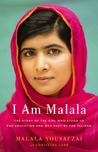
I Am Malala

I Am Malala: The Girl Who Stood Up for Education and Was Shot by the TalibanI Am Malala: The Girl Who Stood Up for Education and Was Shot by the Taliban by Malala Yousafzai

This book was worth reading, but it wasn't my favorite.  I know I should be more patient, but Malala hits me as immature and spoiled, so I really just didn't like the voice of the book.

However, it was very interesting to read about 9/11 and "the war on terror" from a Pakistani perspective, to see what war on the ground was like for the civilians, and especially to read about the Islam/Pakistan history and culture, particularly as it relates to women.

She and her family are still very devout Muslims, which was also interesting but sad to me.

I thought this quote was very telling:  "The Taliban is not an organized force like we imagine.  It's a mentality, and this mentality is everywhere in Pakistan" (232).

I'm afraid that mentality permeates more than just Pakistan.


Monday, March 2, 2015

The Other Wes Moore: One Name, Two Fates

The Other Wes Moore: One Name, Two FatesThe Other Wes Moore: One Name, Two Fates by Wes  Moore

I don't even know where to begin in expressing my thoughts upon finishing this powerful book.  There's so, so much to talk about.

Two men, raised in similar circumstances--black, in poverty, fatherless, with drugs available in the street.  Yet their circumstances were different.  One boy's father was absent due to death from a freak medical issue, the other was absent due to absolute apathy to his son's existence.  One boy's single mother had a support system in her family, a faith heritage, and an appreciation for education.  The other had an older brother who started dealing drugs before he was 10.

One teenager had a brush with the law, got sent to military school, and gained strong black mentors.  The other teenager spent much of his adolescence incarcerated and fathered four children in a few short years with two different women.

One man is a veteran, a Rhodes scholar, an economist, an author, a husband.  The other man is serving the 10th year of a life sentence.  He is 33 years old.

I loved this book and its honest examination of two men's lives, their choices, and their consequences.  I appreciated that the author didn't excuse or justify "the other Wes's" crime or try to prove his innocence.  It was a case study of two similar yet different lives.

There are many points worth discussing.  As a mother myself, I am struck by the differences between the two mothers.  They had different levels of education, different morals, different support systems, and what might even be described as different levels or types of commitment to their sons.  One seemed to sit hopelessly by, watching the train wreck of her son's life careen out of control, while the other mama persevered and did whatever it took to influence her son's life for the better.  Was it about their relationships with their sons?  One son seemed to care more about his mother being proud of him, even as he fought for his own independence and manhood.  "My desperation for her support was in constant tension with my desperation for independence and freedom.  I projected apathy about her feelings, but I wanted nothing more than to make her proud.  In other words, I was a teenager, deathly fearful of disappointing her but too prideful to act like it mattered" (1277).

I am also struck that the cycle is continuing uninterrupted.  "The other Wes's" mother is now raising three of his children in addition to a niece, a nephew, and her third son.  Her first son died in prison serving a life sentence.  This just hurts my heart.

I found it interesting that the author is a practicing christian while the other Wes had adopted the Muslim faith in prison.  How very true it is that our actions influence this life, but the eternal stakes are even higher.  "(don't) ever forget the high stakes of these stories--and of all of our stories:  that life and death, freedom and bondage, hang in the balance of every action we take" (77)

I thought this book tiptoed around systemic racism, poverty, and privilege.  The way we're shaped, the way we think, our worldview--it matters.  The influences we have in our lives, people stepping up to mentor and disciple those coming along behind us--it matters.  I think it's good for white people to see and vicariously experience this peek into what life was like for these black men.

  • "Single-parent households were the norm in his world.  At best, kids would have a setup whereby they would get to see their fathers regularly and even stay with them a lot.  But a family where the father lived with the mother, happily?  This was new to Wes, and he liked it" (520)
  • "In 2008, there were 417 homicides in NYC. In 1990, there were 2,605.  Those murders were concentrated in a handful of neighborhoods, and the victims were concentrated in a single demographic:  young black men.  In some neighborhoods, the young men would've been safer living in war zones" (847)
  • "Later in life I learned that the way many governors projected the numbers of beds they'd need for prison facilities was by examining the reading scores of third graders" (893).
  • Having an advocate on the inside--someone who had gotten to know me and understood my story on a personal level--had obviously helped.  It made me think deeply about the way privilege and preference work in the world, and how many kids who didn't have 'luck' like mine in this instance would find themselves forever outside the ring of power and prestige.  So many opportunities in this country are apportioned in this arbitrary and miserly way, distributed to those who already have the benefit of a privileged legacy"2510).
  • "I found myself surrounded by people who kept pushing me to see more than what was directly in front of me, to see the boundless possibilities of the wider world and the unexplored possibilities within myself. People who taught me that no accident of birth--not being black or relatively poor, being from Baltimore or the Bronx or fatherless--would ever define or limit me.  In other words, they helped me to discover what it means to be free.  The chilling truth is that Wes's story could have been mine; the tragedy is that my story could have been his" (2818).
  • "But if the situation or the context where you make the decisions don't change, then second chances don't mean too much, huh?" (1058)

If we fail to plan, we plan to fail.
"Wes had spent much of his adolescence incarcerated, and he knew that occasional bids in the pen were part of the game.  But he'd never figured this.  Maybe it was because he'd never thought long term about his life at all.  Early losses condition you to believe that short-term plans are always smarter.  Now Wes's mind wandered to the long term for the first time.  Finally, he could see his future" (2453)

Two of my favorite quotes:

  • "Our roots help to determine our routes.  The choices we make about the lives we live determine the kinds of legacies we leave" (2870).
  • "The common bond of humanity and decency that we share is stronger than any conflict, any adversity, any challenge.  Fighting for your convictions is important.  But finding peace is paramount.  Knowing when to fight and when to seek peace is wisdom" (2633)

Excellent case study, fascinating to ponder.

Sunday, March 1, 2015

TBR Pile Challenge

What a great idea!  I came across it too late to technically participate, but I am going to go ahead and join "unofficially".

2015TBRbutton

The idea is to make a list of 12 books to read in 2015.  Each of these books should be something you have had on your TBR list for at least a year.  I'm adding an embarrassing element to it--I want it to be a book I have owned a copy of, and still not gotten around to reading!  I always used to buy one book, read it, and then by another and so forth.  Somehow I have purchased more books in recent years than I can keep up with reading (almost always from thrift stores or free on Kindle, but still!) so I have several on my shelves that I haven't read.

Here is my list of books that I already own which I would like to complete this year.
  1. Ten Ways to Destroy the Imagination of Your Child by Anthony Esolen (Kindle).  I've seen this one recommended and reviewed many times.  I was delighted to see if free one day for my Kindle and downloaded it.
  2. Raising Real Men by Hal and Melanie Young.  I was ordering some rubberband guns for the boys off their site and rather impulsively added this book to my order.  I have read many books about raising boys, and I guess I got tired of the subject, since I never opened it.  Now that the authors are coming to speak to our homeschool group and they will be staying at our house, I'm thinking I should be able to say I've read it when they see it on my shelf!
  3. Little Heathens:  Hard Times and High Spirits on an Iowa Farm During the Great Depression by Mildred Armstrong Kalish.  Kristy keeps talking about how much she enjoyed this one, and she's only let me down once. . .(Jasper Fforde, cough) :)
  4. The Measure of a Man: a Spiritual Autobiography by Sidney Poitier  this looks fascinating to me, I have just never put it high enough on my list.
  5. Keeping Our Children's Hearts by Steven and Teri Maxwell.  I have owned this for several years, and have liked many of their books.  I need to read this one.
  6. Seabiscuit by Laura Hillenbrand.  I picked this up from a thrift store after loving Unbroken.  Briana and Destry have both read it, and Destry says it's even better than Unbroken.  
  7. Black Like Me by John Howard Griffin.  What a fascinating premise!  I know I'm going to get a lot out of this one.
  8. Dumbing Us Down by John Taylor Gatto.  I'm in my 14th year of homeschooling and I've never read this book.  How can I truly qualify as a homeschooling mom without having read it?
  9. Forgotten God:  Reversing Our Tragic Neglect of the Holy Spirit by Francis Chan (Kindle)  I've had this one for almost two years.
  10. Lit!  A Christian Guide to Reading Books by Tony Reinke (Kindle)  Why have I not read this yet?!
  11. Money, Possessions, and Eternity by Randy Alcorn (Kindle)  I want to read it, but am sure it will be convicting.
  12. The Holiness of God by R.C. Sproul (Kindle)  I know, I can't believe I've never read this one either.  Let's rectify that this year.
Bonus book:  Truman by David McCullough  I have wanted to read this one for so long (ever since Jeff was reading it and wouldn't stop talking about it!), but must admit the size has intimidated me.  I've read 2-3 of his books and love his writing style, and always learn so much.  Maybe this summer. 

So, does anyone want to play along?  You don't have to come up with 12, but what books do you have sitting around that you haven't read yet?