Sunday, January 19, 2014

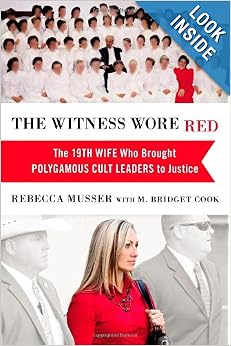
The Witness Wore Red

Disturbing.

That is my summary of this account written by "the 19th wife who brought polygamous cult leaders to justice."  My friend Alana recommended The Witness Wore Red with some reservations--I think she found it disturbing too.

As much as I might like to think I would never be a victim like this, I am also well aware that with different conditioning and upbringing, I might also allow myself--even worse, my daughter(s)--to be given as a child bride to a dirty old man. My inward cynicism which I try to keep pushed down is baited by stories like this, when dictatorial men rule with an iron fist and use religion to assuage their lust for power and sex--more and more sex, with younger and younger women/girls. It's simply horrifying.

The story certainly is gripping and gets right under the reader's skin. The writing, however, isn't as gripping, and I think the book could have been about 100 pages shorter. I'm also left with my usual dissatisfaction in reading a memoir--now what? Where is Rebecca Musser now? What about the rest of the FLDS cult? Has Jeffs received justice? (honestly, I'm thinking castration here. He is so, so gross.)


I found the progression of her blind acceptance to recognition throughout the book to be intriguing:  

  • "I looked at my FLDS role models--my mothers, aunts, and cousins--and everything they had to endure.  Like most of them, I felt that I could handle anything in this life if it meant my salvation in the next" (44).

  • "Even though I had seen suggestions and requests greatly influence the Prophet's behavior, it was daily ingrained in us that he was the mouth of God--the one and only man blessed with total, omniscient gifts of the Spirit.  It shocked me that he had not seen what was happening.  He was supposed to know everything about everyone!  The thought was disturbing to me.  What else did he not know?  I couldn't let that thought take seed, however, or the rest of my world would violently crash down around me.  Once again, I knew I had to remove all doubts from my mind" (107).

  • "Not a single one of us expressed any doubt.  Not only was it unsafe to do so, but we codependently bolstered one another in our blind obedience.  We sang songs about keeping "sweet," never complaining, never questioning, and sacrificing our feelings to do what was right" (110).

  • "All of a sudden, nothing seemed holy about the structure that must be in place for polygamy to work.  Why would God put a roughly equal number of males and females on the earth if he wanted a polygamous society?  This structure meant that women didn't get the time, affection, and validation they so crave.  And because only a select number of male leaders are righteous enough to receive multiple wives, not only do an extraordinarily high number of young men get kicked out, but the marriageable ages of girls becomes increasingly younger as demand intensifies" (172).

  • "The level of depravity that had befallen the people was shocking in and of itself.  But the fact that these grown women, leaders among their sister-wives, had allowed themselves to become abusers of young children scarred my soul.. .that was my past, my training, my flesh and blood.  Had I stayed, would I have fallen so far as to participate too?. . .How I wanted to believe that I would have left long before being forced to participate.  But as I listened to Warren's orders and the women's responses, I knew with a deep shame that blind obedience was the very trap I had lived in for so long, the one that shackled each one of these women as boundaries were shattered again and again.  I was not so different from them" (301).

  • "As I learned more about choice and looked over the extensive evidence in all of the cases I had testified in, I realized that what was happening in the FLDS was human trafficking--both for labor and for sex.  In mainstream society, money and lust are the currency.  In the FLDS, salvation and position are the currency, the the forced acts of labor and sex are the same--the very definition of slavery" (327).

  • "Perhaps one of my biggest lessons was learning the healthy difference between passive, aggressive, and assertive characteristics of behavior.  To be passive means you don't stand up for your own rights.  To be aggressive means that you stand up for your rights while not honoring the rights of others. . .Assertiveness means that you stand up for your rights while honoring the rights of others.  It is difficult to be manipulated or to manipulate others when you are genuinely assertive" (332).

Friday, January 17, 2014

Boy Meets Girl

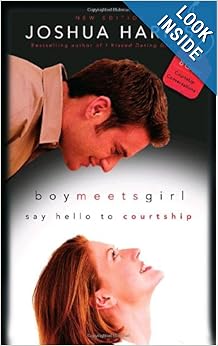
This is becoming something of a habit, but I asked Briana and Destry to write about how they benefited from our  family reading of Joshua Harris's sequel to I Kissed Dating Goodbye.  Instead of writing my own review, I decided to post Briana's thoughts.

I love Josh's style in Boy Meets Girl:  Say Hello to Courship because he is not making a list of rules--he is sharing what helped him in his courtship.  He shares principles and practical applications that can be used in all courtships because they are founded in God's word.

Here are some of my favorite points from Boy Meets Girl:
  • There are two goals of a courtship:  1) to glorify God and 2) to answer the question "Should I marry this person?"  The first goal seems obvious yet it was a good reminder for me.  The goal of everything in my life needs to be to glorify God.  This reminder helped  me realize that courtship and marriage aren't about me, they are about bringing glory to God.  I like Josh's point with goal number 2 of courtship, because it directs the focus.  Courtship is not just for fun or to make me feel special--courtship is to help a person decide if someone would be a good spouse for them.  Sometimes the answer to this question is no and then a courtship ends and you part ways.  Josh explains that the goal of a courtship is to figure out if someone is right for you in a pure way so that even if the answer is no you can come away with joy instead of sorrow and regret.
  • Another point Josh had that I appreciated was that I need to take this seriously.  Finding a spouse has to be done for the right motivation (glorify God) and needs to be done purposefully.  If I am in a courtship someday I want to follow this point and be sober-minded and purposeful because that is a major way to guard my heart and have a meaningful relationship.
  • Accountability is a part of courtship that can be a huge blessing.  I cannot rely completely on myself to stick to my convictions in a relationship.  The prayer and counsel of wise, trustworthy people in my life can help me and the young man courting me to make good decisions and glorify God.
  • Josh suggests three phases to courtship that were very helpful for me to think about:  1) Friendship.  This is the phase where the boy and girl get to know each other.  I'm glad Josh pointed out this phase because I like to make new friends.  This phase tends to be skipped in relationships, but it is important and can contribute to a beautiful courtship and hopefully marriage.  2)  Fellowship.  Once you get to know the person on the surface level you can begin to discuss deeper topics such as the Bible, your beliefs, dreams, goals, etc.  I like that Josh pointed out that fellowship is not interrogation--these subjects can come up naturally, we don't need to force it.  (I can get a little interrogative, so this is good for me to remember)  3)  Romance.  Romance does play a part in courtship, but you must be careful, make sure you are setting specific boundaries, and protect yourselves and each other.  I'm glad this point is in Josh's book because without it, I would feel guilty over any emotion and I would block attraction out.  It is a delicate balance, but attraction with self-control is a good thing.
  • Communication is key.  I'm glad Josh says you don't have to be perfect at communicating (I'm not!), the important thing is to be purposeful, truthful, and humble.  Communication is what makes a courtship such a beautiful relationship--and we cannot be successful without it. 
I realize I've said a lot, but really this is only a preview of all that Josh says in Boy Meets Girl.  Overall, Josh's book helped me understand the purpose and logistics of courtship a lot better and gave me peace by helping me see that if I put God first and strive to glorify Him with my courtship (and all my relationships) He will guide me in His way.

Wednesday, January 15, 2014

Keeping it Real: Intentionality

I aspire to be intentional.  I really do.

But lately I feel like life is just happening to me.

Do you ever feel like that?  I feel like I'm just surviving each day.

There are books I want to read with my older kids and books I want to read with my little kids.  There are Scriptures I want to share with each of them in their different stages, recipes I would like to try, piles I would like to find homes for, people I would like to get to know better, to have in my home.

But the days keep slipping by without me getting them done.

There are character issues I need to address with my little ones, character issues I need to address with my older kiddos, character issues I need to address in myself.

I would like to help my older kids learn a few more academic things we haven't gotten to yet and Briana is graduating in a few short months.  I would like to be more purposeful in preparing her to manage a home someday.  I need to be more intentional in guiding and nurturing the relationships my children, especially my younger children, have with one another.

I read a great blog post about a woman who is claiming this word as her word for the year.  I am tempted to copy her.

Tuesday, January 14, 2014

Freezer Cooking for January

It was my turn to plan the meals for our day of cooking and to purchase all the ingredients.  Phew.  I must say, however, that food expenses have increased dramatically since I last did something like this.  That's a big job, but kinda fun, too.  Briana and I even took the opportunity to go grocery shopping together and then out for a supper splurge at The Latin King (yum!)

Because I chose several "tried and true" freezer meals from the past and some recipes from my new freezer cooking book, I will type out recipes and instructions here since I only chose two recipes that I found on the internet.  I can't wait to see how the other girls rate them on our 1 (didn't like at all) to 5 (so good I would eat it again tomorrow) scale.

Pizza Burgers  overall rating 3.83
Brown two pounds of hamburger and one pound of sausage.  Add one jar of Ragu spaghetti sauce, one can of pizza sauce, 2 oz can of mushroom pieces, 1/2 can of black olives and heat.  Stir in one pound of cubed Velveeta until melted.  Fill top with parmesan cheese.

Freeze the meat mixture.  When ready to use, thaw and spoon onto open-face buns and top with cheddar or mozzarella cheese.  Bake 15-20 minutes.
Taco Pasta Shells  4

Brown one pound of hamburger.  Add chopped green onions and about 4 oz. of cream cheese.  Spoon this mixture into cooked large pasta shells.  Place shells in freezer pan and pour a jar of salsa over the top.  Top with cheese (cheddar, colby jack, Mexian mix, whatever you like).  Bake 15 minutes at 350, then add crushed tortilla chips and green onions.  Serve with sour cream.
BBQ Chicken  3.67

Cook a whole chicken in a roaster while basting with a glaze of salt, pepper, 1/2 c. honey and 3 T. dijon mustard.  Mix 1 bottle honey bbq sauce, 1/2 c. Italian dressing, 1/4 c. brown sugar and 2T. Worcestershire sauce and pour this over the deboned chicken and freeze.  To serve, heat in crockpot or pan on stove and serve on buns.  (This is from my sister-in-law and is very yummy)
Brunswick Stew  2.75

Cheesy Ham and Potatoes  3.5

Mix 32-oz frozen hashbrown potatoes, 8 oz cooked, diced ham, 1 can cream of mushroom soup, 1 can cream of chicken soup, 8 oz. sour cream, 8 oz. cream cheese,  and 1/8 t. pepper.  Put in 9X13 pan and top with 2 c. Colby Jack cheese.  Bake at 375 for 1 hour.
Chicken Pot Pie  4.83

Start with 4 c. of cubed, cooked chicken.  Combine with 4 c. frozen hashbrown potatoes, thawed, 1 pkg frozen mixed vegetables, 1 can condensed cream of chicken soup, 1 can condensed cream of onion soup, 1 c. milk, 1 c. sour cream, 2 T. flour, 1/2 t. salt, 1/2 t pepper, 1/4 t. garlic powder, 1-2 c. shredded cheddar cheese.  Divide between two 9-inch deep pie plates.  Roll out pastry (you can make it or buy refrigerated) and cover.  Cut slits in pastry, trim, seal and flute edges.  Thaw, bake at 425 for 30 min, reduce heat to 350, remove foil over edges, and bake 50-55 min or until golden brown.
Sunday Night Stew  (this is super yummy, from the Pioneer Woman!)  Overall rating 4.3

Chicken Cordon Bleu  4.25

Pound four chicken breasts to about 1/4 inch thickness.  Spread with butter, sprinkle with Italian seasoning, and top with one slice of ham and one slice of Swiss cheese each.  Roll up chicken, secure with toothpick.  Bread in a mixture of flour, garlic powder, onion powder and salt, then dip into egg and water mixture, then dip into dry bread crumbs.  Bake at 350 degrees for 45 minutes

Monday, January 13, 2014

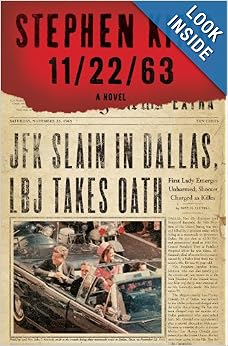
11/22/63

What a storyteller!

I could do without the language and the occasional allusion to illicit practices--which probably explains why I hadn't read any Stephen King in probably ten years--but the man truly knows how to suck a person into a story.

A couple of friends recommended 11/22/63 (the date of JFK's assassination if your history knowledge doesn't include memorized dates) written by Stephen King.  It kept me up until around 1 am for four nights in a row, but it was worth it.  I can't imagine how much research he had to do to write this book with such accuracy, and his imagination is truly incredible.  I didn't love the ending, but I suppose it is hard to come up with an ending for the effects of time travel.

I'm also glad he captured my reason for keeping this blog, even as I'm finding it more and more difficult to set aside time for it:
"I'm one of those people who doesn't really know what he thinks until he writes it down" (170)
King also seems to be quite literary as he references many, many books--some I've never heard of, others I've read but he made me want to read again.  Of Mice and Men is one I haven't read since high school that I think I need to read again, and I also read The Catcher in the Rye about that time but couldn't tell you about it.  After reading his succinct commentary, I think I'm going to have to revisit it.
"I think it says a lot about how lousy the fifties were, and a lot about how good the sixties can be.  If the Holden Caulfields of America don't lose their outrage, that is.  And their courage" (308).

Friday, January 10, 2014

A Couple of Light Reads

I stole a little time in these last couple weeks to read some of the titles friends recommended when I posted my facebook query for good books to read.  Two of these books were pretty light titles from the "christian fiction" genre, which I don't tend to read a lot of.  (I'll try to avoid my soapbox about the substandard writing, characterization, plot, and watered-down christian living, etc.)  I didn't love either of these books, but I don't think they were a complete waste of time as they did give me a couple thoughts to ponder.


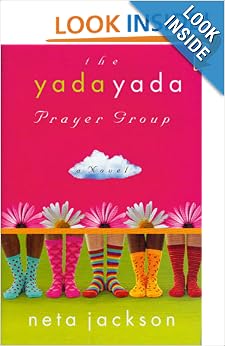
One friend claimed The Yadayada Prayer Group by Neta Jackson as one of her top-ten-books that have had the most influence on her life.  I won't be giving it that high of a rating, but I am glad to have read it and it is one of those books I would love to discuss over a Pepsi and some chocolate while cozied up in a couple red chairs with a good friend.

I have to admit my primary emotion in reading this book was wistfulness.  You know how there are a precious few people you just connect with?  Those with whom differences don't matter because there is a soul-deep connection?  In a nutshell, that's what this book is about.  It's about a group of women from widely diverse lifestyles, ethnicities, denominations, ages, etc. who connect in a prayer group and both challenge and support one another in their individual walks with the Lord.  I've made friends since our move, but these friendships are based on shallow, surface commonalities that I can't see standing the test of time, growth, and change.  This book made me wish for my own "yadayada prayer group".

I also appreciated how the author illustrated the ironies of life.  You just might help a homeless, drug-addicted mother one day, and then a few years later find a lasting friend in her.  Or you just might think you are a mature christian, perhaps even a little above some other fellow christians, but then life's curveball reminds you that you, too, are "just a sinner, saved by grace."

Another friend recommended Quaker Summer by Lisa Samson in particular, but then said I would enjoy anything by this author.  Since Quaker Summer was checked out from the library, I checked out three other Samson titles (hey, we were traveling a lot and I thought if I really liked her, I might read several in the van).  I chose to read Tiger Lillie first.

I'll confess I'm not a fan and I'm choosing to read another friend's recommendation (11/22/63 by King--I'm intrigued) before I read any other Samson books, although I think I'll still try Quaker Summer when it comes in at the library.  Tiger Lillie was basically about a woman who ran a wedding planner business while hoping to find a husband of her own even as she fears a marriage like that of her sister who has lost her identity under her legalistic, control-freak husband.  I ended up skimming many pages about the various details of the weddings she planned (yawn) but I wanted to find out what happened to her sister, so I finished the book.

The one little nugget I appreciated from this book was in reference to the legalistic lifestyle she observed in her brother-in-law:  "I hope this lifestyle at least makes them feel better about themselves.  I mean, in the end, isn't that what legalism is all about?" (290).  I thought that was a pretty good summation of a lifestyle that dictates external behaviors, lists, and rules as if they somehow make a person more pleasing to God rather than the surrendering of self from the heart in response to the Father's love.

Monday, January 6, 2014

Tale of Two Cities Essay Two

(Briana's essay is here)

In lieu of a review of The Tale of Two Cities by Dickens, I am instead sharing the essays Briana and Destry wrote as we studied this novel and the time period in which it was set.  Here is Destry's essay.

                In the 18th century, France was ruled by a self-absorbed aristocracy. The nobility had no concern for the citizens and taxed them mercilessly in order to support their own luxurious lifestyles. The citizens pleaded with them, then protested, then warned, but the nobility disregarded every complaint. The people’s vexation turned to anger and vehement wrath. Starting in July of 1789, the people of France began overthrowing the government. This uncontrollable mob of angry vengeance in motion claimed to be the new Republic of France. The motto shouted in the streets was “Liberty, Equality, Fraternity, or Death.” The French’s anger was understandable, and the nobility did need overthrown, but they got carried away. The French patriots forgot and forsook the true meaning of liberty, equality, and fraternity, making death their sole maxim.
            The French people had been deprived of liberty under the nobility and they were willing to stop at nothing to regain it. The Republic wanted to be free to live as they chose and to govern themselves. They wanted to be free from aristocratic oppression and excessive taxes. The Republic’s desire for liberty was a good thing, but their view of liberty was not. The French patriots wanted a liberty that was void of all morality. True liberty is freedom within the boundaries of right and wrong. The Republic’s motivation for liberty was selfish. They wanted what they wanted and didn’t care about anyone else. In their struggle for freedom, the Republic only created more bondage. They imprisoned, enslaved, and slaughtered those who had done the very same to them. Essentially, the scenario wasn’t changed at all. There was still a leadership which oppressed its subjects. This was not true liberty. It was simply the justification for vengeance. The Republic did not pursue true liberty, they were only interested in selfish gain.
            The people of France were fed up with the nobility’s self-elevation, so they attempted to produce equality in the Republic, but had their focus in the wrong place. During their reign, the nobility generally considered themselves better than the peasants. They thought of themselves as higher, more important, and more deserving beings than the lower class. In their opinion, the people were meant for their use. The French people wanted to be on an equal basis with the nobility, but the Republic’s view of equality was wrong. True equality evaluates people’s rights while the Republic evaluated possession. In the people’s eyes, if you were wealthy, you were bad. The Republic demanded that the rich be torn down and everyone basically be poor. France neglected to respect the equality of each person. Their lack of respect for the natural rights of humanity resulted in a new aristocracy similar to the previous one. The Republics false view of equality resulted in a whole new age of oppression, fear, and poverty. 
            The respect of equal rights produces a sense of fraternity. To the patriots, the Republic was like a big family, a brotherhood. The people were united under a common characteristic: they had all been oppressed by the nobility. This drew them together under one purpose: to get revenge. Fraternity in and of itself is a wonderful thing. Christianity for that matter is a fraternity. But Republic fraternity was based on hate; the basis of Christian fraternity is love. In creating this fraternity, the Republic disowned and estranged fellow humans from our common brotherhood by killing them. Rather than being a fraternity of humanity, the French people were a brotherhood of blood.
            The Republic bathed itself in wrathful malice and became intoxicated with murderous revenge. Most people would consider the ruthless actions taken during the French Revolution to be repulsive. The French may have been justified in overthrowing their government, but by no means were they justified in slaughtering so many people. The Republic’s basic intention was to overthrow tyranny, but once they began basking in limitless power, they became intoxicated with self. It’s almost as though they started out with Liberty, Equality, and Fraternity, then decided “if someone tries to keep me from being happy, I’m just going to kill them.” As soon as the people got that first taste of limitless freedom, they became engulfed in self-absorption. This made death a means rather than an alternative to Liberty, Equality, and Fraternity.  A country without these key elements paves the way for a reign of terror and a road to death.

Sunday, January 5, 2014

Tale of Two Cities

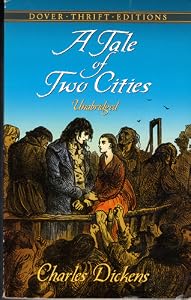
The December selection for Carrie's Book Club was A Tale of Two Cities by Charles Dickens.  I will confess that I read this with Briana and Destry earlier in the school year, and I never got around to writing a review of it.


The kids and I got so much out of this great novel set during the French Revolution (which we were studying in our history lessons) and have developed quite an appreciation for Dickens and his incredible (if long-winded) gift with language.  People simply do not write like this anymore.

Because I am behind in writing book reviews (or possibly I am just lazy, or then again, I might be doing so because I enjoyed them), I am going to share the kids' essays prompted by our reading and discussion of this novel and its setting.


Contrasting the French and American Revolutions
By Briana

            During the late 1700’s, two history-shaping revolutions took place. The first was the American Revolution and the second was the French Revolution. Though these revolutions occurred simultaneously, the outcome of each was very different. While the American Revolution gave birth to the freedom-based United States, the French Revolution resulted in The Reign of Terror and massive political upheaval in France. The fundamental similarities between these two revolutions can make it difficult to understand why they turned out so differently. Both revolutions started as a result of the people desiring to be free from the oppression of a king and his nobles. Also, both revolutions were led by men of great talent who spurred the people on. A declaration and constitution were also written for each country, outlining what each believed. Even though these revolutions had similarities, their differences led to their divergent results. The outcomes of the revolutions were dictated by their history, government, and goals.
            The American and French revolutions were greatly shaped by the background of the people who participated in them. The people of France were burdened by a history of oppression. For decades, the lower class had been little more than slaves, forced by the nobles to work and pay heavy taxes. As a result of this, the people of France were poor and starving. Americans, on the other hand, had been living in a free new land experiencing the blessings of prosperity, plenty, and self-government. The French were not only oppressed physically, but they were also uneducated. There were three estates, or classes, in France at this time: the Clergy, the Nobles, and the peasants. The peasants were largely uneducated, and spent their days struggling to survive. By contrast, there were no distinct classes in America, and education was very important to the average American. There was a very high literacy rate in the American colonies before and during the revolution. The French people’s poverty, ignorance, and oppression motivated the peasants to revolt. The American Revolution, on the other hand, was started by well-educated, prospering colonists who wanted to maintain and protect their rights from the king who was encroaching upon them. The history and education of the people involved in the revolutions made the one a desperate enterprise, and the other an enlightened desire for liberty.
            Because the two revolutions were driven by people with different backgrounds, two distinct governments were established. The French set up a democracy in which every citizen directly participated. In the reign of terror, it was the populace of Paris that influenced the judges to execute or spare prisoners, and during the massacre of the prisons, the people were the executioners. In America, however, the people were not directly involved in the new political system. America set up a republic, in which the people were represented in a legislature. Because of the indirect influence of the general public, the American system was more orderly and organized, and contained no mob rule. The democratic structure of the new French government made it possible for the general populace to rule the country, and throw moderation and responsibility to the wind, while the structure of American government insured that liberty and justice would be given to all. The people of France and America both established a government, but America designed a more responsible system to protect and manage their rights.
            The most striking difference between the two revolutions can be seen in the dominant goal each country strove to achieve with their revolution. The goal of the French people in their revolution was revenge. The populace wanted to rid France of the people who had oppressed and dehumanized them for centuries. The Americans, on the other hand, desired to secede from those who would not respect them and form a separate, but equal, nation. Because France’s goal was revenge, the revolutionaries soon took their desires too far, and carried out revenge upon thousands of innocent people. Violence and bloodshed became the true rulers of France, bringing terror and destruction upon the country. America’s goal of separation caused them to be involved in a war which cost many Americans and British their lives. This war, however, was motivated by the desire to separate from Britain, not to get revenge. The Americans were successful over the British in this war, and the new nation was recognized by the world. The history-shaping results of the French and American revolutions were determined by their different goals.
            The American and French revolutions are well-known in human history, for both had a strong impact on the world. The French Revolution horrified the world with the brutality and murder of those years. By contrast, the American Revolution is remembered as the birth of a nation that has been a shining example of liberty and self-government. Many times throughout human history revisions to countries and governments have been necessary and revolutions have taken place. In modern life, citizens of a country often feel the need for revisions in their own country’s government. When those situations arise, citizens can look to the past for guidance in handling revolutions and reformations effectively. The background, goal and new system of government must all be taken into account. A modern revolution could choose to follow the example of France, and ignorantly take revenge on wrongdoers, or it could follow in the footsteps of America and strive to separate from oppressors and form a responsible government. 

(I'll try to remember to post Destry's essay tomorrow)

Saturday, January 4, 2014

Top Ten Books of 2013

How *does* one pick the top ten books she has read for the year?  By what criteria can I place one book on my list instead of another? Some books are especially appropriate for a season, others are wonderful because of the writing or the characterization, others really challenge me to think, and still others hold memories as I read and discussed them with my teenagers.  As difficult as it was to decide, here is my list of "The Top Ten Books I Read in 2013" (in no particular order and for whatever reason I chose them) linked to my review if I got around to writing one.

The Hiding Place by Corrie ten Boom was even better my second time through as I read and discussed it with my teens this year.  What incredible faith; what incredible character; what incredible faithfulness.  One of the most inspiring books I've ever read.


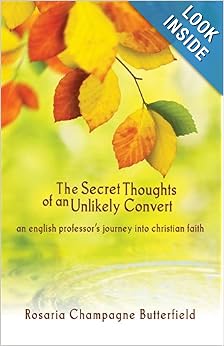
I said The Secret Thoughts of an Unlikely Convert by Rosaria Butterfield would make my Top Ten when I read it way back in February and I was absolutely right.  I read this book twice this year (because it was just that good!) and spent many hours discussing it with fellow readers.  This account of a "liberal lesbian English professor" encountering the Word is well-written, convicting, and challenging.


Unplanned by Abby Johnson was a thought-provoking story of a woman who got caught up in the abortion rhetoric and worked as a director of a Planned Parenthood until she was finally able to see the truth and became bold enough to share it.  It impacted me because it perfectly illustrated why I want to teach my children to think and be able to discern when they are presented with ideas and compare them to the Word of God.
Amusing Ourselves to Death by Neil Postman was simply too big to review.  I read and discussed this book with both my teenagers and my local book discussion group.  I started a review, but never got around to finishing it.  The book is insightful and rather scary and depressing, but well worth reading.  Here is a quick blurb from the three paragraphs I had written and I will cross it off my "list of book reviews to finish":
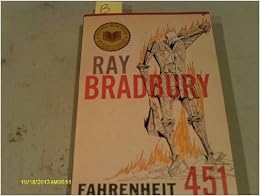
Postman argues that Huxley's dystopic world is a more likely eventuality than Orwell's because we as a society are voluntarily giving up our freedom of thought in exchange for the paralyzing and mind-numbing escapes provided in entertainment, specifically in the form of television.  No scary, foreign government needs to come and overtake our society, forcefully removing our liberties to read and think and publicly debate ideas and policies.  We are daily forfeiting these rights by not using them.  Just as no one fought the firemen book-burners in Fahrenheit 451 because they had already chosen not to read the books, so will we lose our freedoms by reason of disuse without anyone noticing or fighting to retain them.

True Community:  The Biblical Practice of Koinonia by Jerry Bridges is another book that was just too big for me to condense to a review.  It might have been the particular season I was in, but I found his examination of biblical fellowship quite profound and thoroughly enjoyed the many scriptures he dug into.  I would love to someday read this one again because again, it's just that good.


Through Gates of Splendor by Elisabeth Elliot was a selection for Carrie's book club and while I had seen The End of the Spear many times, I had never read any of the accounts of the men being killed as they tried to take the Word to the native tribes of Ecuador.  This is another of those books that is simply inspiring and challenges one not to get caught up in the day-to-day cares of this world, but rather to live purposely for Christ.


I got to read Fahrenheit 451 by Ray Bradbury again this year--this time with my teenagers.  I've read this book three or four times and like it more every time I read it, even as I get a little more concerned every time I read it as I see our society voluntarily giving up its freedom to educate itself and thus setting itself up to LOSE that freedom.  What a great book!


I debated over listing Brave New World by Alduous Huxleyon on my top ten reads this year, but I so enjoyed re-reading it as Destry read it for the first time and discussing it with him.  It's a strange book, but it's so effective at getting into a person's mind that I decided to go ahead and put it on my list.


The Great Divorce by C.S. Lewis was chosen by one of my friends in my local book discussion group.  I placed it on my top ten list because, well, obviously, it's C.S. Lewis, right?  But it really challenged me to examine myself and ask "according to the way I'm living, what do I value more than an eternity with God?"  Sobering--but excellent book.


I think I'll end this list with two books that have made a big impact on my year, even as they aren't and likely never will be classics or even widely-read.  The Brain Integration Therapy Manual and Elijah's Cup are books that have opened my eyes and my mind to new ways of thinking, given me an appreciation for the different ways God created us, and helped me to better understand and parent my children and I'm incredibly thankful to have read them this year. 

My complete list of books read in 2013 can be found here.  I seem to be finding less and less time to read these days, and as I look over my list, I'm a little embarrassed at how often I choose the light or easy read when I manage to steal a couple hours in this busy season.  I'm challenging myself to learn more--to grow more--through my reading selections in 2014.  Some friends have already provided me with several great suggestions!