What I liked:
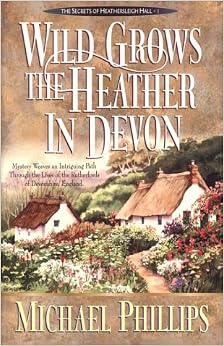
Phillips purposefully set out to examine how the embracing of christianity would affect the life of an intellectual, affluent couple in the early 1900s in England. While intellectualism, evolution, universal reconciliation, socialism, and feminism were sweeping the world, what impact were they having on christianity?
Isn't that a fascinating premise? In addition to the "hot topic" themes, there were other thoughtful nuggets tucked within the story.
Dying to Self:
One of the characters struggled with exchanging her independence for trusting in the Lord. That's a struggle I could relate to; indeed, I think each of us need to grow in the area of submission. I found it especially interesting that this character's mentor twice told her that "laying down the right to self-rule" is our very reason for being on this earth. Ponder that one!
"There's nothing else that life's for than t' learn that one thing--how not to do what ye yerself want. That's all this earth's for--t' teach us t' do what someone else wants" (212).Religion vs. Relationship
"It's not easy. Laying down your independence and saying you're not going to rule your own life is the hardest thing in the world. But then 'tis the only thing we're put on earth to learn. And men have to learn it just as well as women. 'Tis the human way to salvation, as I see it--laying down the right to self-rule" (269).
"When people are not dwelling in that vital center--the center of the Father's goodness--religion becomes a tedious affair. . .Many of them do not know that vital, pulsating foundation which is the mainstay of life--the center of the Father's goodness. So they go about living a religion rather than a reality, more afraid of the Father than abiding in his love. They fear hell to a greater extent than they are convinced of his power to give life" (246).
When reading the Bible ask the Lord "How does this apply to me? Specifically. What does it have to do with my daily life and my relationships with others? What does it have to do with my attitudes, my outlook, my values, my priorities? What does it have to do with how I conduct myself and how I think? These are questions you have to ask. Then you must say, 'Lord, what changes do you want to make in my life on the basis of this scriptural principle I am reading? What growth do you have for me here? What do you want me to do about it?" (262)
A father's loving plea to his wayward daughter:
"I implore you to hear me. Please do not reject my words. If at all possible, put away your youthful pride for a moment and listen to this exhortation. It is simply this: There is no greater measure of maturity and character than the capacity to listen to the counsel of others about oneself" (396).
Appropriate Stages:
(Catherine) "I like being fourteen too. It's a little like being halfway between a girl and a woman. I don't want my life to change any faster than it should. I want to enjoy every age as much as I can" (422).I really liked this quote even though it was a minor moment in the book. Too often I see people (especially teenaged girls) chafe at their current season, anticipating the next season to such a point that they don't enjoy where they are or even learn the lessons the current moment has for them. How I love it when young people live the attitude Catherine expressed above! I think it's a great way of learning contentment and is much more mature than the child who thinks they are ready for the next season and proudly wishes away the time they are experiencing.
I think I'll save my thoughts on the book's example of parenting philosophy for another post. This is one of those books that I don't really recommend--it's the first in a trilogy that I'm not planning to continue reading--but yet there were enough good little nuggets that I'm rather glad I read it anyway. My primary complaint about the book is just that it was so slow, a fact the author warned the reader about in the introduction. This is not an action-packed book, it is just the slow unfolding of ideas and belief in a family's life. Another reader might thoroughly enjoy the series.

No comments:
Post a Comment
Thank you for sharing your thoughts with me. When you comment, you're speaking my love language!