Sunday, November 3, 2013

Wild Grows the Heather in Devon

My local book discussion group spent the last month reading Wild Grows the Heather in Devon by Michael Phillips.  I would never have read it had Dian not chosen it.  I wonder if I would have finished it if I hadn't known we would be getting together to discuss it.  It's really just not a book I would typically read.  Having said that, it was rather interesting and contained some good talking points.

What I liked:
Phillips purposefully set out to examine how the embracing of christianity would affect the life of an intellectual, affluent couple in the early 1900s in England.  While intellectualism, evolution, universal reconciliation, socialism, and feminism were sweeping the world, what impact were they having on christianity?

Isn't that a fascinating premise?  In addition to the "hot topic" themes, there were other thoughtful nuggets tucked within the story.

Dying to Self:
One of the characters struggled with exchanging her independence for trusting in the Lord.  That's a struggle I could relate to; indeed, I think each of us need to grow in the area of submission.  I found it especially interesting that this character's mentor twice told her that "laying down the right to self-rule" is our very reason for being on this earth.  Ponder that one!
"There's nothing else that life's for than t' learn that one thing--how not to do what ye yerself want.  That's all this earth's for--t' teach us t' do what someone else wants" (212).
"It's not easy.  Laying down your independence and saying you're not going to rule your own life is the hardest thing in the world.  But then 'tis the only thing we're put on earth to learn.  And men have to learn it just as well as women.  'Tis the human way to salvation, as I see it--laying down the right to self-rule" (269).
Religion vs. Relationship
"When people are not dwelling in that vital center--the center of the Father's goodness--religion becomes a tedious affair. . .Many of them do not know that vital, pulsating foundation which is the mainstay of life--the center of the Father's goodness.  So they go about living a religion rather than a reality, more afraid of the Father than abiding in his love.  They fear hell to a greater extent than they are convinced of his power to give life" (246).

When reading the Bible ask the Lord "How does this apply to me?  Specifically.  What does it have to do with my daily life and my relationships with others?  What does it have to do with my attitudes, my outlook, my values, my priorities?  What does it have to do with how I conduct myself and how I think?  These are questions you have to ask.  Then you must say, 'Lord, what changes do you want to make in my life on the basis of this scriptural principle I am reading?  What growth do you have for me here?  What do you want me to do about it?" (262)

A father's loving plea to his wayward daughter:
"I implore you to hear me.  Please do not reject my words.  If at all possible, put away your youthful pride for a moment and listen to this exhortation.  It is simply this:  There is no greater measure of maturity and character than the capacity to listen to the counsel of others about oneself" (396).

Appropriate Stages:
(Catherine) "I like being fourteen too.  It's a little like being halfway between a girl and a woman.  I don't want my life to change any faster than it should.  I want to enjoy every age as much as I can" (422).
I really liked this quote even though it was a minor moment in the book.  Too often I see people (especially teenaged girls) chafe at their current season, anticipating the next season to such a point that they don't enjoy where they are or even learn the lessons the current moment has for them.  How I love it when young people live the attitude Catherine expressed above!  I think it's a great way of learning contentment and is much more mature than the child who thinks they are ready for the next season and proudly wishes away the time they are experiencing.

I think I'll save my thoughts on the book's example of parenting philosophy for another post.  This is one of those books that I don't really recommend--it's the first in a trilogy that I'm not planning to continue reading--but yet there were enough good little nuggets that I'm rather glad I read it anyway.  My primary complaint about the book is just that it was so slow, a fact the author warned the reader about in the introduction.  This is not an action-packed book, it is just the slow unfolding of ideas and belief in a family's life.  Another reader might thoroughly enjoy the series.

Saturday, October 26, 2013

Little Mama

There's just something about little girls playing mama, isn't there?  They instinctively have that nurturing tendency even at a very young age.
 
I want you to notice the details in this picture.  From the baby snugly wrapped in the sling to the purse on her right shoulder to the diaper bag on her left wrist all the way down to mama's heeled shoes (because yes, I of course, always wear heels around the house--pearls too--just call me June Cleaver!)

Simply adorable.

For her birthday we bought her a doll who drinks water from a bottle and then proceeds to make messes like a real baby--from spitting up on her burp rag to wetting her diaper.  Kiana has named this doll Tosha and she takes her mama role very seriously.
She takes her baby to church with her and dutifully cuddles her and feeds her as she deems appropriate while listening quietly to the Bible study.  When she wants to go outside to play, she seriously comes to me, addresses me as Grandma (lovely!) and asks me to babysit, shows me where the diapers are, the change of clothing in the diaperbag, etc. as though I have no idea how to care for babies, er, um, dolls.
She pushes her baby around the house in the stroller my sister got her for her birthday, and when we go places she carefully straps her baby into its car seat.  Now, I will admit to being a bad influence as I have encouraged her to leave her baby in the car when we are running quick errands.  But it's just a doll, c'mon, we can't take forever to get a doll out of its carseat at every stop, now can we??

And yes, that's blue eye shadow on her eyes.  Eye shadow and heels--she has NOT learned these things from me, people!  I'll claim the loving care of children, but this little lady is determined to look good while doing it.

Tuesday, October 22, 2013

November Nightstand

Time  hasn't allowed for much reading or blogging lately.  In October I only read two books--can you believe that?  One was the Brain Integration Therapy Manual, the other was for my local book discussion group, Wild Grows the Heather in Devon.  I haven't gotten around to reviewing either of them yet, nor have I written reviews for several of the books I read in August or September.  'Tis the season, I guess.


But here's what's on my nightstand for the next few weeks, should I get around to them:
  1. The Picture of Dorian Gray is the October selection for Carrie's bookclub at Reading to Know.  I've been curious about this book for several years, and still hope to get it read sometime in the next week.  I haven't even started it yet, nor do I have a copy.  But I still have a slim hope. . .
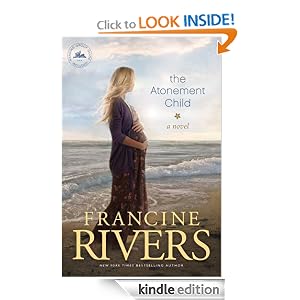
  2. We are reading The Atonement Child by Francine Rivers for my local book discussion group.  Hurray!  I've read this one before and it's both easy and though-provoking.  We all decided we needed a good story and relatively quick read after the 400+-paged Wild Grows the Heather in Devon, especially considering how busy all of our lives are right now.
  3. I started Seabiscuit by Laura Hillenbrand yesterday, although I only got about 20 pages read.  I enjoyed Unbroken so much that I've long been wanting to read Seabiscuit and Destry said it is another winner.  Maybe I'll get a nice lazy Sunday afternoon to dig into it.
  4. I received John Piper's "Filling Up the Afflictions of Christ" from Crossway to review.  It looks interesting and thankfully short.
  5. If I have the time and inclination, I might read The Busy Homeschool Mom's Guide to Daylight by Heidi St. John which has been sitting on my desk enticing me for the last several months.  But I'm not going to hold my breath and I suggest you not hold yours either.
  6. Oh, I also just happened to notice Iris Johansen has published two books this year which I have not yet read--two Eve Duncan books at that!  What does it say about me that I'm pretty sure I'll make time to get these no-brainer, escapist novels finished? 
What are you hoping to read in the next month?

Sunday, October 13, 2013

We Shouldn't Starve This Winter

We've been blessed with an abundance of food this harvest season.  These pictures were taken before butchering chickens or canning pears and before my last two batches of apple butter.
I've been blessed to be able to can carrots, green beans, applesauce, apple pie filling, apple butter, pears, chicken, and broth.  We've also been able to freeze homemade pizza sauce (made from our tomatoes and fresh basil), pesto, apple pie slices and peaches.
Frankly, I'm tired of canning and otherwise preserving.  It has made for a very busy start to our school year!
Snapping beans is a family affair!
 Yet I'm thankful to have all this yummy, homegrown food to feed my family.  Several of my friends have also preserved a great deal of food. 
 It makes me wonder if we might be in for a pretty severe winter.  If you get hungry, you know who to hit up for a good meal! :)

Tuesday, October 8, 2013

The Apple Saga

We tried something new this year.  (Surprise, surprise--you DO know my husband, right?!)  We have five apple trees and this year was a bumper crop year.
What does one do with all these apples?  Well, the kids invariably grab one to snack on as they play outside, we serve them raw at mealtime, and we make applesauce, fried apples, apple pies and apple crisps to eat with our meals.  Then we can applesauce, can apple butter, can apple pie filling, and freeze apple pie slices.  

 
Next you take apples everywhere you go, giving them to any sucker friend who will take some.  Then you send an appeal through your local homeschool group for someone, anyone, everyone, to please come and get some apples.  You get rid of bushels and bushels of apples this way.  But the trees just keep producing.
Finally you borrow an apple press and make gallons and gallons (and gallons) of apple cider.  It's great fun and the whole family plays along. The simple process involves gathering apples, then chopping the apples in one machine before pressing the apple pieces in the final contraption.

Yum, yum, it really tastes quite delicious--so apple-y!  As for the rest of the apples?  They are rotting on the ground as they fall providing a great feast for all the buzzing insects gathered under the trees.

Unless you would like to come and gather some.

Monday, October 7, 2013

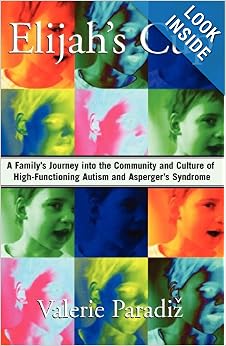
Elijah's Cup

I love Mondays.  I know that isn't normal, but Monday is the day Destry has his violin lesson and symphony rehearsal and I go with him.  I put the little ones down for nap, leave them with big sis, and then Alan is home before they wake up.  Meanwhile, I get to grade essays, prepare my speech lectures, write a blog post, waste time on facebook, or read a book in peace and quiet while waiting on Destry.

The book I picked up most recently from the library (conveniently located next door to his lesson--how fun is that?!) is called Elijah's Cup:  A Family's Journey Into the Community and Culture of High-Functioning Autism and Asperger's Syndrome by Valerie Paradiz.  Overall, I really enjoyed this mother's account of life with her son as she learned more about him and about the history and culture of autism.  I wasn't sure I would finish it at first as she writes with a rather flowery prose and it was slow getting started, but it got a lot better.

I didn't sense that she was writing from a position of professing faith, but I did find her title interesting.  Autism was part of the cup her son Elijah was given in this life.  All of our cups look different but as she said "Elijah's cup is full.  He has his special interests.  He has his comedy and his ups and his downs.  He has his autistic mentors and his friends" (199).  Like Jesus Himself, a parent might be tempted to ask the Lord to "let this cup pass from me" but Paradiz comes to recognize the gifts in autism and declares Elijah's cup to be full even pointing out the neurotypical culture's tendency to be preoccupied with "societal concerns, delusions of superiority and obsession with conformity".

I think I most enjoyed Paradiz's exploration into famous people who have had autism including pianist Glenn Gould, scientist Albert Einstein, comedian Andy Kaufman, and artist Andy Warhol.  I found it fascinating to read about these people's "eccentricities" and how they fit within the autism spectrum.  Maybe it's just my ignorance on the subject, but I would have never interpreted Warhol's Campbell's soup series as "an autistic predilection for the serial and the literal.
Autism is a life of profound serial experience.  It is a life of cataloguing repeated events and variations of events.  Repeated images.  Repeated language.  Repeated movements and repeated gestures.  Its expression is found, classically and clinically, in the lining up of things in rows, side by side. . .the repetition is compelling, a mirror of internal drama and development" (159).
I also enjoyed Paradiz's synopsis of what she learned about autism researchers including Hans Asperger, Bruno Bettelheim, and Leo Kanner.  It was interesting that some suspect Asperger himself had the very syndrome that wears his name.  "Asperger himself once said that one had to be a little autistic oneself in order to understand autism" (68).

I was also fascinated to learn that parents and siblings of autistic children are frequently called "cousins" as they possess autistic shadow traits, sometimes called broader autism phenotype (BAP).  The author of this book recognized that she, her father, and her grandmother were all cousins and it helped her to understand herself better and to mend her strained relationship with her father as she had spent most of her life feeling ignored and overlooked by him as he got absorbed in his interests or would talk with her only about what he found fascinating (such as counting cards in blackjack).

Finally, as a "neurotypical" myself, it was enlightening to consider society's expectation of conformity and how that expectation affects those with autism--or even to consider if this expectation is good.  As one of her friends said "I have exactly as many relationships as I want.  I relate only as myself, only in ways that are authentic to me.  I value people only as themselves, not for their role or status, and not because I need someone to fill empty spaces in my life.  Are these the severe deficits in communicating and relating that I keep reading about?   Actually, there are some pretty serious deficits, but not in my ability to care.  There are deficits in my ability to recognize people who aren't able to care, people who aren't authentic, who don't value me as myself, or who aren't connected at their own cores.  It's hard for me to tell when someone is lying.  It took me a very long time, and a lot of painful experience, just to learn what lying is" (182).

I was challenged when another of the author's autistic friends observed "If I know that I do not understand people and I devote all this energy and effort to figuring them out, do I have more or less empathy than people who do not understand me, but who do not even notice that they don't understand me?" (190)  As we become more aware of the ways the Lord made us to be different from one another, I think it is good to learn more so we can better understand and appreciate one another rather than trying to fit everyone into the same mold.  I'm trying to decide what I think of the following quotes which seem to imply our society is more concerned with making everyone seem the same--to fit in--than it is with equipping each of us to effectively use the gifts we have been given. 

"Today the main emphasis in the education of Asperger children is placed on learning social skills, such as how to take turns in conversation or how to broach a new topic gracefully" (151).

"I learned that autistics feel they can be helped with more important things than constantly making eye contact or mimicking what is thought to be appropriate social behavior.  I learned that more than anything else, they need help in identifying and communicating their needs, monitoring their levels of sensory stimulation, and knowing how and when to remove themselves from overwhelming situations before they reach a 'meltdown state'" (140).

All in all, it was a very interesting and enlightening book and I'm glad I read it.

Friday, October 4, 2013

Life Skills

Destry has been gaining more life skills this fall in addition to his academic studies.  In addition to the large 2-car garage, our property had an old single garage which the previous owner said he would likely just tear down if he were keeping it.
We found the extra space convenient, however.  It's nice to be able to park the car in a garage (especially when there is snow and ice in the winter) and we have a plethora of bikes, scooters, and other outdoor toys that needed a home.
So we decided to fix up the garage as a learning project for Destry.  He had to start by completely stripping the roof, both of shingles and the sheathing because there were holes completely through the roof.
Then he and Alan put on new sheathing to give the roof a solid base.
The little ones really wanted to help.
They at least thought they were helping, whether they were or not.
Destry completed most of the work himself.  Alan showed him how to do each new part and helped him finish the cap before rain was expected, but Destry really gets the credit for this nice new roof.  It looks so much better and will last a good long while yet.  Best of all, Destry gained new skills and experience he will take with him whatever he does in life.
 A coat of paint, some new window panes, and we have a nice little garage and a job well done.