Thursday, June 5, 2014

The Kitchen House

The Kitchen HouseThe Kitchen House by Kathleen Grissom

My sister recommended this one and I could hardly put it down.  Even with a new baby, I stayed up until 12:30 to finish it (dumb, dumb, dumb--especially when she got up at 2:30 to eat--yawn).

As much as I hate reading about the horrors of slavery, I think it's good for us every once in a while to be reminded of what it was like.  This particular book paralleled the life of an Irish indentured servant girl with the lives of the African slaves on a plantation. 

I think what struck me most was the helplessness of the characters.  As much as I might think I would do this or that, there were situations about which these people had no choice--no choice!  No choice, other than how they were going to handle it.

It was a captivating read, but I have to admit I was glad to finish it and return to this life in which I have freedom.

Friday, May 23, 2014

Bridge to Haven

Bridge to HavenBridge to Haven by Francine Rivers

Ahhhhh, Francine Rivers!  She just never disappoints!

Her characterization, as usual, is perfect.  I know Abra, Zeke, Joshua, Susan, etc. 

Abra was abandoned by her birthmother, but was almost immediately found, loved, and wanted by more than one family.  Unfortunately, however, she never felt loved or wanted and developed a rebellious spirit that ran off looking for love in all the wrong places.  This plotline is fragile territory to me as an adoptive mother, as I've read too many accounts of adoptees struggling with these same emotions and experiences.  I was torn between Abra's perspective and the experiences of those parental figures in her life.  I do fear my children taking a similar route and the heartbreak that could ensue, waiting and praying for a prodigal child to see their way out of their own pain and come home.

The deeper message of Rivers' plot, of course, is spiritual in nature as we all are found by the Lord as helpless, vulnerable babies who He loves, but then we go our own way while He patiently waits with open arms for us to return home.  I suggest revisiting Ezekiel 16 before starting this book.

I devoured Bridge to Haven, and look forward to reading it again before the sequel (I expect--she left it wide open for a sequel)comes out.

Thursday, May 22, 2014

The Big Book of Homeschooling

The Big Book of HomeschoolingThe Big Book of Homeschooling by Debi Pearl

I might have had too high of expectations.

I like a lot of what Debi Pearl has to say in other books (although I encourage reading with discretion).  And I was right with her in the first chapter as she discussed the evolution of the homeschool movement--how parents have lost the creativity that first motivated the movement and now rely on boxed curricula to "educate" their children.

But the rest of the book was broken into subjects and just had random suggestions of fun ways to teach ideas within those subjects, such as practicing letters in a pile of salt or sending cards to relatives for penmanship practice.  They aren't bad ideas. . .I guess maybe it's just that I've been homeschooling for 13 years with this philosophy already.  For a new homeschooler, or for a frustrated workbook-homeschooler, this book might be worth the $20.  It just wasn't worth it to me.  I was disappointed in what it was.

Friday, May 16, 2014

Chivalry Lives On

 I love the mornings when one of my children gets up a little earlier than the others and we get to cozy in the recliner together.

"What did you dream about last night?" I asked Tyrell who was snuggled up into me.

"There was a princess getting married.  And a dragon was bothering her.  So I pinched his belly.  And then he bit my leg."

"Oh no!  Did that hurt?" I asked.

"No.  It didn't hurt."

"Well good.  I guess next time maybe you should have a sword to make him stop bothering the princess, huh."

"No," with a shrug.  "He stopped when I pinched him.  Then I woke up."

Thursday, May 15, 2014

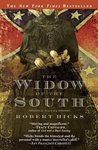
The Widow of the South

The Widow of the SouthThe Widow of the South by Robert Hicks

This fiction novel, based on real events during the Civil War, had a slow start, but got much better as it progressed.  I think the author did a good job fleshing out the different characters and exploring their stories and motivations.  Above all, I think it was a story about doing what you have to do whatever circumstances warrant.  It also made me think about grief and the different ways people handle life's tragedies.

I'm looking forward to discussing it with my local book discussion group.  I borrowed this copy from the library and will need to return it before we meet, so I'm going to jot some discussion points here so I won't forget them.

  • The perception of God.  Carrie had lost three of her children and was struggling with her understanding of God.  She felt "forsaken and abandoned by a distant God who had not once--not once--interceded in consideration of what she couldn't endure.  What did it say in Deuteronomy?  As thy days, so shall they strength be.  I had believed this!. . .And our reward had been more than anyone could endure. . .I loved God.  No, I didn't.  I feared Him, I was in awe of His strength, and I had always obeyed Him" (106).  Also "There are things we are called to do that we cannot refuse, as futile as they seem, because to refuse them would mean to lose faith.  Not just faith in God so much as faith in man, which I suppose amounted to the same thing" (395).
  • Being trapped in a (lesser?) role based on birth into circumstances beyond one's control (specifically "Negros" and women).  "Theopolis was the most unlikely Negro I had ever known, and I wondered idly what kind of man he would be if he were white" (95).  In regards to Becky:  "what about our women (who were) sacrificed behind the plow in those years (of the Civil War)?  It's not the plowing, you see; it's the elimination of everything but the plowing, the possibility that you could be anything but someone who walked behind a mule and gathered in the snap beans.  A man could transform himself, and although these last few years that transformation had been completed by war and sometimes death, it is impossible to say how much bigger life must have seemed just knowing that it could be changed.  A girl like Becky could not change anything for herself, and she had been called upon to take up the work and life of a man" (164).
  • The necessity of having a purpose in life--of being needed.  Carrie was aroused from her depression by the need of dying men after the Battle of Franklin.  "I sometimes felt the old paralyzing darkness draw around me, but it was always tempered by the inescapable fact of these men lying around my house and in my yard, and the suspicion that they were harbingers of something I had not known before.  How horrible, I thought occasionally, to think that these men were welcome and not a burden.  I was freer than I had ever been.  I felt obliged to the world, a world much larger than that contained between the four walls of Carnton, and although the burden seemed larger, I was similarly enlarged by the burden of shouldering it" (136).
  • Life's experiences broadening a limited and sheltered existence.  "The smell of men overpowered me.  My nose had no experience with such a smell.  It could not parse its elements.  The smell was heavy and sour and musty, and I took it to be the smell of that world which had been kept at bay by my house and my husband these many years" (140).
  • The significance of the color black.  "Carrie began to wear black though.  I suddenly realized that she had probably been wearing black for going on twenty years. . .she got used to it, like we always become accustomed to things.  She thought she looked good, she thought the boys she saw every once in a while thought she might be pretty in her black.  She learned we can become accustomed to anything, which is why things can seem to us like they're in their proper place when they really aren't.  We just don't pay attention after a while" (192).  "I could smell corn bread being burned in the kitchen, and for a moment I could barely keep myself from jumping out of the bed as best I could and going to save it.  Keep it from going all black and wasted" (194).  (Zachariah--also black thread/black cocoon pg 195)
  • The nuances of marriage.  "If as a girl I had loved John because he was a mystery and didn't interrupt me, I became obsessed with the one-legged man in the bed because he was a mystery and he did interrupt.  I had grown old, and I knew the pain of being left alone with my thoughts.  The silence John had given me was no gift, as well- intentioned as he was" (198).
  • The draw to a completely different perspective of stuff.  "My house did not impress him, nor our land, nor our few remaining fine things.  What did he care for china or silver or French wallpaper?  Perhaps that was why I was drawn to him:  he didn't care, and I was shocked and excited by the idea that such things weren't worth caring about, that the most beautiful objects were still objects and therefore dead.  He was alive, and he had lived for reasons other than propriety and position" (266).
  • The inevitability of change. . .growth. . .transformation.  "Men transformed themselves and the South. . .Transformation carries with it the creeping awareness of the infinite possibility of change, the infinite likelihood of change, and at some point the whole thing becomes frightening and unmooring.  One longs to know that some things don't change, that some of us will not be forgotten, that our perambulations upon the earth are not without point or destination" (400).
  • Doing what needs to be done.  "This hadn't been my choice but something, in a long line of somethings, that had been thrust upon me without my permission. . .Things are just thrust upon you; that's just the way it is" (170).
  • The paternity of Theopolis

The more I reflect, the more I am looking forward to the discussion!

Tuesday, May 13, 2014

Home Safe

Home SafeHome Safe by Elizabeth Berg

While this book wasn't as enjoyable as other Berg books I've read, it did serve its purpose:  to provide a little escape from real life.  I could really identify with the love and appreciation for the written word which was woven through the pages of this novel. 
"She opens the novel again, reads one page, another.  Then another.  And finally, everything in her own life surrenders to the one being presented here. . .Dan once had a friend who died from metastatic cancer. Toward the end, Dan visited him with some frequency; and each time he would call before going, to see what his friend might want or need.  Each time, his friend requested the same thing:  books" (39).
I thought it was interesting to consider the role writing played in Helen's identity.  It made me wonder what might affect my self-identity if I suddenly lost the ability to do it.  After her husband's sudden death,  the "prolific author" was no longer able to write so she lost both her husband and a large chunk of her 'self'.
"Bad enough that writing was the way she made her living; it was also her anchor, her lens, her abiding consolation.  Without her husband or the practice of laying out words on a page, she feels that she spend her days rattling around inside herself; that, whereas she used to be a whole and happy woman, now she is many pieces of battered self, slung together in a sack of skin" (13).
I've read other reviews by readers who were frustrated with Helen's character, with her inability to pick herself up and move on independently after her husband's death.  But I guess I could just relate to that likelihood.  At one point Helen realized "that she is the kind of person who must do things for or on behalf of another.  For her, the taste of the ice cream, the red of the sunset, the humor in the movie must be shared to be" (189).  I've been married for almost 22 years myself and I am aware I have grown quite dependent on Alan.  We are two halves that make up a whole and we have fallen into a pattern of responsibilities.  It wouldn't be easy for me to take care of car issues, plumbing, or insurance.  I would have to make an effort to understand and accomplish those things that have become "his job".  Similarly, Alan wouldn't find it easy to plan meals, do grocery shopping, or accomplish the million and one tasks I complete to ensure the children's education.  I am also a person who enjoys sharing things.  Several years ago I won a trip to Montreal when I was selling Pampered Chef items.  I still almost regret going because Alan stayed home with Briana and Destry and it's almost as if the trip didn't even happen.  I don't have anyone who shares those memories with me.  I would much rather share an experience with someone who I can later reminisce and laugh with about it.

I doubt I would be a very enjoyable person to be around if Alan would die suddenly.  I think the shock would paralyze me from jumping into independence and I would likely be rather lost for a little while.  I *have* asked him to let me go first--you know, ladies first and all that--it would just be gentlemanly of him.  :)

Thursday, May 8, 2014

Aryana Joy

I'm still here.  I'm so far behind in everything, you wouldn't even believe it.  Yet here at the computer I sit, with my kitchen counter covered in dirty dishes, piles of shoes beside the door (why DON'T the kids put them where they belong?!), clean laundry covering my bed (and needing folded), dirty laundry oozing out of the hamper, and piles of garbage bags full of hand-me-downs stuffed in a corner of my living room calling for me to sort them.

I'm stealing just a few moments because I miss blogging.  Aryana is three weeks old today and I'm not doing a very good job recording these (sleep-deprived) moments!  I guess it's because I'm too busy holding, rocking, singing to, feeding, and changing (the ubiquitous poopy diapers of) the precious little princess herself.

Luckily for you, (really, I am happy for ME) my sister has some SKILLS with a camera.  She came over to capture memories of Aryana when she was a mere 9-days-old, just about 24 hours after she arrived home.
I just love the colors and texture of the cocoon Briana made for her up against her skin.
 Aryana Joy

I want to record our thought process behind Aryana's name.  We found two different meanings for her first name.  The one citing it as being of Russian origin meant "most holy".  In Sanskrit, Aryana means "a noble and pure woman".

Her middle name, Joy, is after her first mother, whose name is Abigail (which means joy) and Aryana certainly is a source of joy to us.

Precious Aryana Joy, may you always be "a noble and pure woman filled with joy from the Most Holy One."