Thursday, July 24, 2014

Women of the Word

Women of the Word: How to Study the Bible with Both Our Hearts and Our MindsWomen of the Word: How to Study the Bible with Both Our Hearts and Our Minds by Jen Wilkin

Very well-done!   This is an excellent guide for anyone wanting to know *why* to study the Bible and *how* to study the Bible.  Much of it was familiar to me (she spends a lot of time on the inductive method), but she included some tips I haven't practiced, she inspires me to be more disciplined,  and her prose is quite readable.

I especially agreed with her thesis that "Bible literacy matters because it protects us from falling into error. Both the false teacher and the secular humanist rely on biblical ignorance for their messages to take root, and the modern church has proven fertile ground for those messages" (45).  Both the false teacher and the secular humanist rely on biblical ignorance for their messages to take root.  Yes, indeed, we see that all around us!

In summary, Wilkin's study method starts with studying the Bible as a way to know God (what a shocker, right? Not to know ourselves first, but to know God and then to know who we are in relation to Him).  She effectively proves that our study needs to be with our minds first, and then our hearts for "the heart cannot love what the mind does not know" (31).  I think this is all too often mixed up in our touchy-feely religious world today.  She then breaks Bible study down into "the five P's":  Purpose (keep the metanarrative, the "big story", in view), Perspective (Exegesis--figuring out why it was written, to whom and when because "a text cannot mean what it never could have meant to its author or his or her readers"), Patience (with yourself and your circumstances), Process (comprehension, interpretation, and application), and Prayer (for "prayer is what changes our study from the pursuit of knowledge to the pursuit of God himself" (103).  A great little chapter!).

After she outlines some outstanding study tips, Wilkin made a case for women studying in community where it "takes on dimension and accountability"  and "becomes a vehicle for discussion, confession, repentance, encouragement, and mutual edification" (124).  As I've recently been introduced to people who think women are unable to effectively study the Bible together without it derailing into a "gossip session" and "rants against husbands", (!!  I've been in many, many ladies' Bible studies in the last 25 years and have never seen this practice!!) I was especially encouraged by her perspective on women's studies.

Teachers were also both encouraged and warned of their responsibilities.  I appreciated her reminder that a teacher's job is to "absorb a large amount of information and then distill its most important elements" which require a great deal of time and effort, and I also agree that "while we very much want (a study group) to connect relationally, the primary goal is to grow their knowledge of and love for God" (134).

She made her point many times throughout the book that Bible study is not merely a pursuit of knowledge (for we know "Knowledge puffs up while love builds up" I Corinthians 8:1) but rather is "a means to love God more, and to live differently because we have learned to behold him better.  And it is a means to become what we behold.  The reciprocal love of God is a love that transforms" (148).

In my opinion, the message in this book is very much needed.  I think I'm going to have to get a group of friends together to read and discuss--and apply--this book with me.

Friday, July 18, 2014

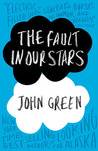
The Fault in Our Stars

The Fault in Our StarsThe Fault in Our Stars by John Green

I have so many mixed thoughts and feelings about this book.  It was quite well-written and full of delightful, memorable quotes worth pondering such as "Grief does not change you, it reveals you."  Or "Some tourists think Amsterdam is a city of sin, but in truth it is a city of freedom.  And in freedom, most people find sin."  Or a cancer-survivor's explanation of why he carries an unlit cigarette between his lips:  "It's a metaphor, see:  You put the killing thing right between your teeth, but you don't give it the power to do its killing."

In regard to description and behavior, the characterization was good, yet all the characters kind of sounded the same.  They were full of teenage angst wrapped in deep, philosophical conversations that reeked of pretension.  I could relate to the teenage angst as I went through those faux deep thoughts and feelings as a teen myself, but the philosophical conversations seemed a stretch for a teenager.  Then again, I was never a teenager dying from cancer, so maybe that would mature one's philosophical ponderings.  I enjoyed the author's way with words, such as in this description: "Then he broke down, just for one moment, his sob roaring impotent like a clap of thunder unaccompanied by lightning, the terrible ferocity that amateurs in the field of suffering might mistake for weakness."

What I've listed above is mostly positive, so you might wonder why I have such mixed feelings and am hesitant to recommend the book.  Part of my hesitation is in the targeted audience--teenagers--of the popular book (and now movie).  The book is so hopeless.  The teenagers who are dying from cancer have no hope--no faith in a Savior.  There is some nebulous belief in a "capital-S-Someone" and vague references to a universe that wants to be noticed.  The main character comes right out to say "I'd always associated belief in heaven with, frankly, a kind of intellectual disengagement."  This hopeless worldview is in stark contrast to my own biblical/christian worldview and is not one I wish to see presented to teenagers (or anyone, really).  The difference in worldview affects the actions of the characters when they are faced with cancer.  If you believe life is all about you, then you will seek a way to MATTER.  You will want your death--or your life--to MEAN something and begrudge not being able to die for a bigger cause than just cancer.  You will worry about others remembering you.  If, on the other hand, you have trust in a Savior, your life and death will be about Him, about serving Him, and about growing closer to Him in trials.

This distorted worldview also led the characters to make sure they didn't "die virgins."  Because if you abandon morality to make sure to have avoided this terrible fate of dying a virgin, your life will have achieved meaning.  (insert eye roll)  I appreciate that the author didn't dwell in torrid detail of the act, but I still wish it hadn't been part of the story, especially when directed at teenagers.  As if that line isn't used enough by teenagers as an excuse.  I can just imagine the dramatic reaction of many teens at this moment, celebrating that they were able to be with their "soulmate" before dying (I had a roommate in college who frequently bewailed that she was destined to die a virgin because "everyone else has a boyfriend and I don't") without considering the sacredness of the act or its proper place within marriage. 

Other quotes/themes I found interesting to ponder that I won't go into in this already-lengthy review:
"I fear oblivion."
"Don't tell me you're one of those people who becomes their disease."
"Sometimes people don't understand the promises they're making when they make them," I said.  Isaac shot me a look.  "Right, of course.  But you keep the promises anyway. That's what love is.  Love is keeping the promises anyway."

So, in summary, I thought it was pretty good and I don't regret reading it.  However, I don't agree with the overall worldview espoused throughout so I can't recommend it without a caution to be discerning.

Sunday, July 13, 2014

Animal Farm

Animal FarmAnimal Farm by George Orwell

Brilliant, of course!

It's no wonder this classic stands the test of time.  While it's an obvious satire of the Russian revolution, it's also a timeless commentary on the corruptibility of power.  Certainly there are still those who desire to control others and limit their freedom.  Even while it has a deep message, it is written in a way that is easy to understand.

I especially enjoyed reading this with Briana and Destry (yes, I realize it is summer, but we love reading and discussing great works together!).   I want them to be "wise as serpents and innocent as doves" and I think reading books like this will help them not be the Boxers of the world who ignorantly and blindly follow leaders without examining their motives.

And we all agreed that it made us angry--on so many levels.


Friday, July 11, 2014

Your God is Too Safe

Your God is Too SafeYour God is Too Safe by Mark Buchanan

I thought this was outstanding.  I took my dear sweet time reading it to let the truths sink in.

He is also a wordsmith--I always enjoy authors who use words with such precision and poetry.  In addition to savoring his points, I frequently had to savor the way he expressed them.

I loved his analogy of the borderland where the "saved but not sanctified" reside.  I was going to highlight some of my favorite points, but it turns out I can't narrow it down to three or four.  I'm really glad I own this because I'm going to need to read it again sometime.  It has been a true blessing to me during this season.


Wednesday, July 9, 2014

Still Alice

Still AliceStill Alice by Lisa Genova

Wow!  This is one that sticks with a person.  It was scary for me as I have long dreaded developing Alzheimer's, but it was quite well-written as the main character progresses through the disease and gives the reader a peek into how it feels to lose, then re-shape, her identity.

I cried.  Multiple times.  I cried as this Harvard professor who had spent her life reading, writing, and speaking began to lose her language center.  "Everything she did and loved, everything she was, required language" (74).  I cried as she feared losing her husband's love as she lost herself.  "She'd rather die than lose her mind.  How could she tell (her husband) she had Alzheimer's disease?  He loved her mind.  How could he love her with this? (78).

I sobbed aloud when she couldn't find the bathroom in her own house.  "She was strangely stuck and dumbfounded in the Twilight Zone-like, bathroomless dimension of the first floor.  She was unable to hold it in any longer.  She had an ethereal sense of observing herself, this poor, unfamiliar woman crying in the hallway.  It didn't sound like the somewhat guarded cry of an adult woman.  It was the scared, defeated, and unrestrained crying of a small child.  Her tears weren't all she wasn't able to contain any longer.  Her husband burst through the door just in time to witness the urine streaming down her right leg, soaking her sweatpants, sock, and sneaker.  "Don't look at me!  I don't know where I am.  I'm lost" (150).

I thought it was interesting to see Alice's priorities change.  Where before she had been more concerned with her next big presentation, her next article, her classes, and mentoring doctorate students, the disease forced her to re-evaluate her priorities.  "What did she want?  She wanted to live to hold Anna's baby and know it was her grandchild.  She wanted to see her daughter act in something she was proud of.  She wanted to see her son fall in love.  She wanted one more sabbatical year with her husband.  She wanted to read every book she could before she could no longer read.  She laughed a little, surprised at what she'd just revealed to herself.  Nowhere in that list was there anything about linguistics, or teaching, or Harvard" (118).

There was so much more in this story--lots I would love to discuss with a fellow reader.  Her relationship with her daughter, relationship with her husband, consideration of suicide.  Her loss of self, and her equating her loss of language with a loss of humanity.  It's heart-wrenching, but it's definitely worth considering.

Tuesday, July 8, 2014

What's It Like to Be Married to Me?

What's It Like to Be Married to Me?: And Other Dangerous QuestionsWhat's It Like to Be Married to Me?: And Other Dangerous Questions by Linda Dillow

I liked many things about this book.  I am impressed that Dillow is a true Titus 2 woman--an older woman, married almost 50 years, and sharing the wisdom she has learned in life's experiences.  I think she is right on in many areas, and I liked the way she encouraged women to examine their part in a marriage rather than focusing on what they wish men would or would not do since we only have control over our own actions and responses. 

I really appreciated many of her thought-provoking questions, such as "what will your husband say about you at your funeral" and "in what ways do you need to pray for the Lord to enlarge your heart toward your husband" and "list all the reasons you have respect for your husband" as these questions are personal and force the reader to examine self.

I am glad she was honest and pulled no punches, even at subjects that might be uncomfortable for some readers or in a small group discussion.  She's not afraid to address topics that need to be addressed.  My primary regret in how I read this book is that the group of (wonderful) friends I discussed this with needed to spread the study out over a three-month period and I think I lost the focus of it.  At the same time, a couple of the points I am going to take with me came from our discussions so I'm glad we studied it together.   What are those points I want to remember?  One friend said she determines to be her husband's biggest cheerleader.  Another woman was pierced by her husband's observation that he is viewed as successful and respectable everywhere but in his own home.

Constantly working on this journey of marriage as there is no such thing as coasting--we're either growing closer together or farther apart.

Thursday, June 19, 2014

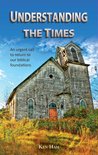
Understanding the Times

Understanding the TimesUnderstanding the Times by Ken Ham

For what it is, I thought this was really good. He emphasizes that we must accept the entire Bible as truth, and use it as the guiding force in our lives. That is the only way we will be able to stand in the face of the predominant culture and its worldview.  I think all Christians should read this. It is very short and easy and to the point.

Here are a few quotes I highlighted:

  • "But excuse me, is it not all the Word of God?  This is key:  when you succumb to this Genesis 3 attack, that Genesis 1-11 does not need to be believed as literal history and true, then do not be surprised when the next generation gives up the rest of the Bible also, which is what is happening across the Western world today."


  • "You know what is wrong with us?  It is this:  We would rather listen to the fallible words of men than the infallible Word of our God!  That is what is wrong with us!"


  • "Here is the answer to why we are losing our children:  the problem is our Christian education!  The research found that we are not teaching the Bible as a book of history and that we are not teaching our children before they leave home how to defend the Word.  We have not taught them to answer the skeptical questions of this age.  We have not taught them apologetics.  We have taught devotion, spirituality, morality, which is what you hear a lot of times from the pulpits--relationships, spirituality, morality.  But we have not taught the Bible as actual history, and we have not taught how to defend the faith against all manner of skeptics in this modern age."


  • "Do you know how to change the culture back?  To see hearts and minds changed in regard to the Word of God.  That is what changes the culture.  And it has got to start in our homes and in our churches.  But we have let generations of children from the Church have their hearts and minds changed by the system, by the world.  That is what fundamentally has changed the culture.  And we helped, as the church, when we accommodated the world's teaching."


  • "Yes, the Philistines have stopped up the wells!  They have taken generations of our children away from the Church, away from the authority of the Word of God and have given them instead a different foundation and a different worldview."


  • "It's time for Christians everywhere to come right out and say that we are all about the Bible:  its authority, its reliability from cover to cover, and its wonderful proclamation of salvation for lost men through Jesus Christ our Lord."

As a side note, I have heard him speak both in person and in recording, and it was amusing to me how clearly his voice came through in this book. I could hear his voice and even his accent while reading. :)