Sunday, January 5, 2014

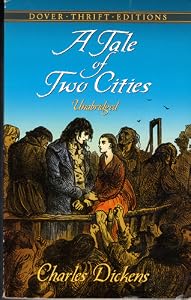
Tale of Two Cities

The December selection for Carrie's Book Club was A Tale of Two Cities by Charles Dickens.  I will confess that I read this with Briana and Destry earlier in the school year, and I never got around to writing a review of it.


The kids and I got so much out of this great novel set during the French Revolution (which we were studying in our history lessons) and have developed quite an appreciation for Dickens and his incredible (if long-winded) gift with language.  People simply do not write like this anymore.

Because I am behind in writing book reviews (or possibly I am just lazy, or then again, I might be doing so because I enjoyed them), I am going to share the kids' essays prompted by our reading and discussion of this novel and its setting.


Contrasting the French and American Revolutions
By Briana

            During the late 1700’s, two history-shaping revolutions took place. The first was the American Revolution and the second was the French Revolution. Though these revolutions occurred simultaneously, the outcome of each was very different. While the American Revolution gave birth to the freedom-based United States, the French Revolution resulted in The Reign of Terror and massive political upheaval in France. The fundamental similarities between these two revolutions can make it difficult to understand why they turned out so differently. Both revolutions started as a result of the people desiring to be free from the oppression of a king and his nobles. Also, both revolutions were led by men of great talent who spurred the people on. A declaration and constitution were also written for each country, outlining what each believed. Even though these revolutions had similarities, their differences led to their divergent results. The outcomes of the revolutions were dictated by their history, government, and goals.
            The American and French revolutions were greatly shaped by the background of the people who participated in them. The people of France were burdened by a history of oppression. For decades, the lower class had been little more than slaves, forced by the nobles to work and pay heavy taxes. As a result of this, the people of France were poor and starving. Americans, on the other hand, had been living in a free new land experiencing the blessings of prosperity, plenty, and self-government. The French were not only oppressed physically, but they were also uneducated. There were three estates, or classes, in France at this time: the Clergy, the Nobles, and the peasants. The peasants were largely uneducated, and spent their days struggling to survive. By contrast, there were no distinct classes in America, and education was very important to the average American. There was a very high literacy rate in the American colonies before and during the revolution. The French people’s poverty, ignorance, and oppression motivated the peasants to revolt. The American Revolution, on the other hand, was started by well-educated, prospering colonists who wanted to maintain and protect their rights from the king who was encroaching upon them. The history and education of the people involved in the revolutions made the one a desperate enterprise, and the other an enlightened desire for liberty.
            Because the two revolutions were driven by people with different backgrounds, two distinct governments were established. The French set up a democracy in which every citizen directly participated. In the reign of terror, it was the populace of Paris that influenced the judges to execute or spare prisoners, and during the massacre of the prisons, the people were the executioners. In America, however, the people were not directly involved in the new political system. America set up a republic, in which the people were represented in a legislature. Because of the indirect influence of the general public, the American system was more orderly and organized, and contained no mob rule. The democratic structure of the new French government made it possible for the general populace to rule the country, and throw moderation and responsibility to the wind, while the structure of American government insured that liberty and justice would be given to all. The people of France and America both established a government, but America designed a more responsible system to protect and manage their rights.
            The most striking difference between the two revolutions can be seen in the dominant goal each country strove to achieve with their revolution. The goal of the French people in their revolution was revenge. The populace wanted to rid France of the people who had oppressed and dehumanized them for centuries. The Americans, on the other hand, desired to secede from those who would not respect them and form a separate, but equal, nation. Because France’s goal was revenge, the revolutionaries soon took their desires too far, and carried out revenge upon thousands of innocent people. Violence and bloodshed became the true rulers of France, bringing terror and destruction upon the country. America’s goal of separation caused them to be involved in a war which cost many Americans and British their lives. This war, however, was motivated by the desire to separate from Britain, not to get revenge. The Americans were successful over the British in this war, and the new nation was recognized by the world. The history-shaping results of the French and American revolutions were determined by their different goals.
            The American and French revolutions are well-known in human history, for both had a strong impact on the world. The French Revolution horrified the world with the brutality and murder of those years. By contrast, the American Revolution is remembered as the birth of a nation that has been a shining example of liberty and self-government. Many times throughout human history revisions to countries and governments have been necessary and revolutions have taken place. In modern life, citizens of a country often feel the need for revisions in their own country’s government. When those situations arise, citizens can look to the past for guidance in handling revolutions and reformations effectively. The background, goal and new system of government must all be taken into account. A modern revolution could choose to follow the example of France, and ignorantly take revenge on wrongdoers, or it could follow in the footsteps of America and strive to separate from oppressors and form a responsible government. 

(I'll try to remember to post Destry's essay tomorrow)

Saturday, January 4, 2014

Top Ten Books of 2013

How *does* one pick the top ten books she has read for the year?  By what criteria can I place one book on my list instead of another? Some books are especially appropriate for a season, others are wonderful because of the writing or the characterization, others really challenge me to think, and still others hold memories as I read and discussed them with my teenagers.  As difficult as it was to decide, here is my list of "The Top Ten Books I Read in 2013" (in no particular order and for whatever reason I chose them) linked to my review if I got around to writing one.

The Hiding Place by Corrie ten Boom was even better my second time through as I read and discussed it with my teens this year.  What incredible faith; what incredible character; what incredible faithfulness.  One of the most inspiring books I've ever read.


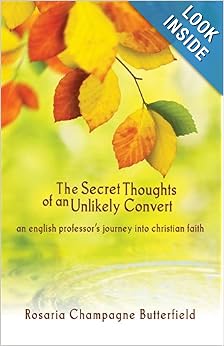
I said The Secret Thoughts of an Unlikely Convert by Rosaria Butterfield would make my Top Ten when I read it way back in February and I was absolutely right.  I read this book twice this year (because it was just that good!) and spent many hours discussing it with fellow readers.  This account of a "liberal lesbian English professor" encountering the Word is well-written, convicting, and challenging.


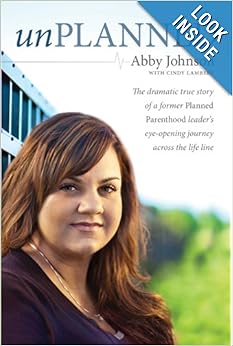
Unplanned by Abby Johnson was a thought-provoking story of a woman who got caught up in the abortion rhetoric and worked as a director of a Planned Parenthood until she was finally able to see the truth and became bold enough to share it.  It impacted me because it perfectly illustrated why I want to teach my children to think and be able to discern when they are presented with ideas and compare them to the Word of God.
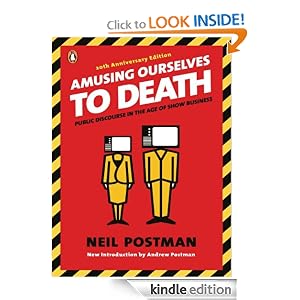
Amusing Ourselves to Death by Neil Postman was simply too big to review.  I read and discussed this book with both my teenagers and my local book discussion group.  I started a review, but never got around to finishing it.  The book is insightful and rather scary and depressing, but well worth reading.  Here is a quick blurb from the three paragraphs I had written and I will cross it off my "list of book reviews to finish":
Postman argues that Huxley's dystopic world is a more likely eventuality than Orwell's because we as a society are voluntarily giving up our freedom of thought in exchange for the paralyzing and mind-numbing escapes provided in entertainment, specifically in the form of television.  No scary, foreign government needs to come and overtake our society, forcefully removing our liberties to read and think and publicly debate ideas and policies.  We are daily forfeiting these rights by not using them.  Just as no one fought the firemen book-burners in Fahrenheit 451 because they had already chosen not to read the books, so will we lose our freedoms by reason of disuse without anyone noticing or fighting to retain them.

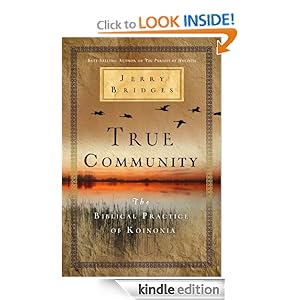
True Community:  The Biblical Practice of Koinonia by Jerry Bridges is another book that was just too big for me to condense to a review.  It might have been the particular season I was in, but I found his examination of biblical fellowship quite profound and thoroughly enjoyed the many scriptures he dug into.  I would love to someday read this one again because again, it's just that good.


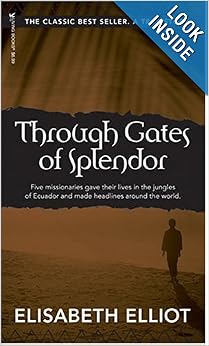
Through Gates of Splendor by Elisabeth Elliot was a selection for Carrie's book club and while I had seen The End of the Spear many times, I had never read any of the accounts of the men being killed as they tried to take the Word to the native tribes of Ecuador.  This is another of those books that is simply inspiring and challenges one not to get caught up in the day-to-day cares of this world, but rather to live purposely for Christ.


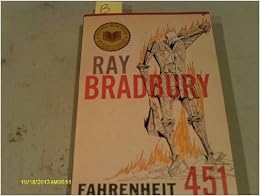
I got to read Fahrenheit 451 by Ray Bradbury again this year--this time with my teenagers.  I've read this book three or four times and like it more every time I read it, even as I get a little more concerned every time I read it as I see our society voluntarily giving up its freedom to educate itself and thus setting itself up to LOSE that freedom.  What a great book!


I debated over listing Brave New World by Alduous Huxleyon on my top ten reads this year, but I so enjoyed re-reading it as Destry read it for the first time and discussing it with him.  It's a strange book, but it's so effective at getting into a person's mind that I decided to go ahead and put it on my list.


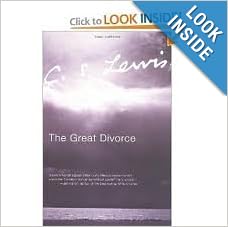
The Great Divorce by C.S. Lewis was chosen by one of my friends in my local book discussion group.  I placed it on my top ten list because, well, obviously, it's C.S. Lewis, right?  But it really challenged me to examine myself and ask "according to the way I'm living, what do I value more than an eternity with God?"  Sobering--but excellent book.


I think I'll end this list with two books that have made a big impact on my year, even as they aren't and likely never will be classics or even widely-read.  The Brain Integration Therapy Manual and Elijah's Cup are books that have opened my eyes and my mind to new ways of thinking, given me an appreciation for the different ways God created us, and helped me to better understand and parent my children and I'm incredibly thankful to have read them this year. 

My complete list of books read in 2013 can be found here.  I seem to be finding less and less time to read these days, and as I look over my list, I'm a little embarrassed at how often I choose the light or easy read when I manage to steal a couple hours in this busy season.  I'm challenging myself to learn more--to grow more--through my reading selections in 2014.  Some friends have already provided me with several great suggestions!

Tuesday, December 31, 2013

How Should We Then Live

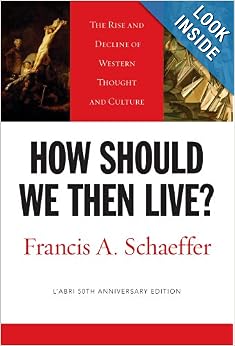
Briana and Destry recently finished reading Francis Schaeffer's classic How Should We Then Live.  We had previously watched most of the episodes on dvd when studying the correlating period of history, but reading the book was so much better for them.  I'm behind in reviewing the books I've read the last couple of months (we've heard this before, right?) so I asked them to each write a quick blurb about how the book affected them.

I think they "got it".  Read their thoughts and prepare to read this great book if you haven't done so yet.


DESTRY:
How should we then live? A profound question really. A question that demands both thought and an answer. The purpose of How Should We Then Live by Francis Schaeffer is to trace the connection between thought and action in history. “What they are in their think world determines how they will act.” Throughout the entire book, Schaeffer focuses on the moral standard applied to each culture in history. He tells us the causes, effects, and future influences of each worldview by tracing the changes in the arts. Each time period in history uses the arts to manifest its answer to the questions “is there meaning in life? If so, what is it? And from whence does it come?” Schaeffer’s down to earth and simply stated style convincingly demonstrates the importance of absolutes in the structure of a civilization. He shows us how the lack thereof has produced the failures of Greece, Rome, Humanism, the Enlightenment, Darwinism, Nazi Germany, and even future America. Schaeffer closes his fascinating, eye opening, and even disturbing account with the simple question: “How should we then live?” Throughout the book we have been wondering how he will answer this thought provoking question. He gives us the source of this question from Ezekiel 33:1-11. The question is found in verse 10. Instead of answering it himself, he gives us God’s answer from verse 19:  if the wicked turn from his wickedness, and do that which is lawful and right, he shall live thereby. Schaeffer wants to encourage us to abstain from the great wickedness of placing anything in the place of our Creator and live by that which is lawful and right. This is “how we should then live.”

BRIANA:
How Should We then Live was assigned to us by mom as a part of our art appreciation course. While this book is about art, its true subject is much more. It is a history of human worldview starting with the ancient cultures of Greece and Rome, and finishing with the 1970’s. Dr. Schaeffer’s purpose with this book is to explain the thinking behind the actions of society; to explain why we do what we do. Art is a helpful tool for this, because artists use their works to express the worldviews of themselves and their societies. Dr. Schaeffer moves through Greece and Rome, the Middle Ages, the Renaissance, the Reformation, and into the modern era, using art, politics, education and entertainment to describe how our worldviews affect our actions.
                I learned so much from How Should We then Live. I was especially fascinated by the last few chapters which dealt with the shifting worldview of America in the 1900’s. Dr. Schaeffer’s words gave me new insight into how humanism leads to pessimism which in turn leads to a desire to just “take it easy” in life, and do what feels good. Dr. Schaeffer explains that this progression is what happened in the sixties and seventies, and I can see it continuing today. I have been able to apply this book to my other areas of study, including history and government. I can more readily understand the “why” behind the “what” of people’s actions and decisions. This book has helped me examine my own worldview and realize that I need to reject humanism and embrace God’s love as the reason for my value.
                How Should We then Live is one of the best books I have ever read, and I believe it has been very beneficial to my education. I would go further to say that it is not just beneficial to education: it is essential. If you have not read this book, I urge you to do so. Your view of the world will be forever changed.   

Thursday, December 26, 2013

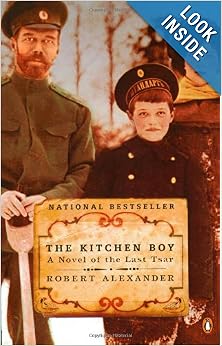
The Kitchen Boy

If you are ever looking for a great, character-driven story to keep you up half the night, you might consider asking your friends on facebook for suggestions.  And if you have friends like mine, you just might end up reading a gem like The Kitchen Boy:  A Novel of the Last Tsar by Robert Alexander.

This book is an excellent piece of historical fiction.  Even though my eyes got really, really tired, I kept wanting to read "just one more chapter" so I could see what happened next.  The author truly is a storyteller.  While I knew nothing (seriously, nothing at all.  I knew nothing about the Romanov family--there is so much to learn and so little time!) about this time period, the country of Russia, or the real-live people who are characters in this book, The Kitchen Boy piqued my curiosity and motivated me to learn a little.  It's always enjoyable when an author stays true to true events of a revolution, the last Tsar and his family (down to the haemophilia) and even the disreputable mystic-faith-healing Rasputin.  (fascinating!  It really is!)  And then when he takes a real-life mystery and speculates on what possibly happened. . .well, that's just fun!

I also enjoyed his commentary about the time period, the ingredients that resulted in the collapse of the Russian dynasty, and his insight into the character and motivations of historical figures:
"A great curse was unleashed that night, inundating every corner of his vast homeland.  If his comrades could commit such an act, was it any wonder that Stalin could kill upward of twenty million of his own people?  No, of course not.  On a hot night in the Siberian city of Yekaterinburg the individual had become expendable" (4).

"But in fact. . .in fact the dynasty itself exploded for a myriad or stupidly brilliant reasons.  Simply, it somehow stumbled upon a perfect, and yet altogether not random, chemical reaction:  you take one part decent man but not enlightened ruler, one part heartbroken mother clutching for any way to save her son, two parts inbred dynasty and gossip-obsessed court, one part Great War, and three parts uneducated, worn, and hungry people and-boom!-what do you get?  Revolution, terrible, terrible revolution, of course!. . .literally overnight a three-hundred-year old dynasty evaporated-poof, gone!-with no one lifting a finger to save it.  Ironic that the Soviet Union collapsed just as easily, which proves it was no better, that the cure, kommunizm, was in fact far worse than the disease itself"  (92).

"Bloodshed was not at all what he wanted. . .and yet any fool would admit that that was his legacy.  When Batyushka, the Dear Father, departed this world, he left behind a vast sea of blood, his own, his family's, his country's.  Up until the ironfisted, totalitarian rule of the Red tsars--the kommunisty, who made the terrible Ivan look like a choir boy-his reign was one of the most violent in all the history of Russia.  One must not forget that it was during the reign of Nicholas II that two disastrous wars, two bitter revolutions, and countless pogroms befell Holy Mother Russia.  And thought Tsar Nikolai wanted nothing more than to avoid violence, though many of the disasters were not of his doing, virtually all of them were his fault because he was Tsar, Russian Tsar, absolute Tsar, Orthodox Tsar.  When you look back through the decades, it now seems utterly obvious that there was no way it could be done, no way an autocrat could rule so vast a country, at least not without complete terror and oppression"  (73).
You'll likely want to read Carrie's review, as it's much more articulate than mine and she is the friend who kindly recommended it to me.  I think I'm going to have to read the next two books Alexander wrote about this time period!

Saturday, December 21, 2013

Freezer Cooking--December

The girls and I had so much fun spending  a day cooking together last month, and we were so blessed by the ready-made meals in our freezer, that we decided to make this a monthly event.  I know others may not care about me monthly posting our freezer cooking adventures, but it's a handy way for me to keep it all in one place under the "freezer cooking" label so here it is.
Jenna, Jamie, Alena, me and Briana
In addition to the excuse to spend several hours with these fun ladies (which I have to admit is a major factor in my participation), another reason I like freezer cooking is because it makes some days/evenings soooo easy.  When we use a freezer meal, all I have to do is set it out ahead of time (although I recently read that they could be cooked frozen just bake them for time and a half).  Not only do I not have to cook that night, but cleanup is also super easy!  No piles of pots and pans and measuring spoons and mixing bowls to wash.  It really frees my time up for other things.

We've only tried one so far, which was the Breakfast Burrito. YUM!  It was so delicious.  We had friends here for the last couple days and I served these Friday morning.  They were so easy and yummy that I'm hoping to make up another batch to freeze and take with us when we go visit some friends next weekend.  That pepper jack cheese is just such a treat.

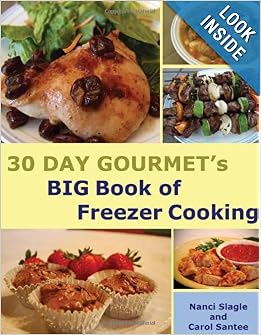
Next month it will be my turn to choose the eight meals and do the shopping for all of us.  In preparation, I treated myself to a book that has been in my Amazon wishlist for the last 2-3 years.  :)
 It seemed like a good excuse, don't you think?  I've only read to page 25 (for yes, this is more than a cookbook--it's more like a textbook!) but I'm thoroughly enjoying it.

I'm listing the entrees Jamie chose for December with links to the recipes and I'll try to come back and rate them like I did last month.

Breakfast Burritos--5
Taco Braid--4
Orange Chicken--3
Black Bean Chicken--3
Chicken Parmesan--3.5
Lasagna--4
BBQ Beef--3.2
Smothered Pork Chops--4

Monday, December 16, 2013

Elf Party, Round Two

Well, it had been several months since we had a family party (especially since Alan was sick on my 40th birthday so we had to cancel that one--wasn't that inconsiderate of him?!) so we decided to have another Elf party this last weekend.   We only invited one family of dear friends for the last Elf party, but this time we went all out--we invited four other families for a grand total of 32 people in our home.
We went a little crazy on decorating too, which was lots of fun.  The kids helped me make paper chains and snowflakes to hang all over the house, and Briana wrote quotes from the movie Elf on the mirrors in the living room and bathroom (Smiling's my favorite--appropriate, don't you think?)  We even printed out some cute banners boasting lines from the movie to hang on one wall above the candy table and on the windows and made "World's Best Cup of Coffee" labels for the coffee cups.
First we all gathered in the living room to watch the movie and eat the requisite "Stinky Santa" (beef and cheese) sandwiches (which are so tasty, by the way).  We also served finger food fruits and veggies before the candy feast began (hoping that might balance out the sugar from the candy, candy corn, candy canes and syrup!).
We were packed in there, so it was hard to get everyone in the picture.  It was a pretty fun group because the Nooks, like us, had seen the movie several times and could quote many of the lines.  The Altmans and Kirkmans had seen it before, but it had been a long time and they didn't remember it very well.  The Horns had never seen it and were anxious to see what the fuss was all about.  That was a fun combination of experience.
After the movie, it was time to let the games begin!  I had some stations set up around the house for the "individual games", such as a jar filled with candy corn for people to guess how many there were and a place for people to make and hang snowflakes to compete for the best paper snowflake.
Snowflake fun.  I got an email from Amy the day after the party saying that her kids loved learning how to improve their snowflake skills and were filling her house with paper snowflakes.  Fun!
We had to break into age groups for the coke-chugging contest and the first group was made up of kiddos from age three through age 10.  The oldest boy of the group, Justin, won this round and chose some Angry Bird popping candy for his prize.
The second group included kids age 12 through all the teenagers.  Unfortunately, Destry missed the party due to the stomach flu so he retreated to the basement.  (I know, it might have been mean to continue on with the party, but everyone was looking forward to it, there was no date available to reschedule, and he is old enough to take care of himself when he's sick, so he was just fine.  But we missed him anyway--especially in games like this).  His good friend Jarret won this round and chose a candy cane full of M&M's for his prize.
Next all the dads, Brett, Dave, Alan, Gerald and James got into the competition.  I figured Alan would win, but Gerald easily beat the other men by a mile.  Way to go Gerald!  He declined the offer of cute candy ankle socks as his prize (although ironically, his wife later won them in the candy corn guess-the-number game).
Here we have Kiana sniffing away at the "It's not free candy" (chewed gum) game to match the flavor with the correct wrapper.  The little stinker was one of the winners of this game!  I will note that it was a little disgusting to make this game as I had the kids help me chew the gum and then had to stick their slobbery globs on the paper plate.
The "I like to whisper too" game is always lots of fun as we passed quotes from the movie from person to person (like the telephone game) to see if it could make it all the way around.  I just love parties and games like this because kids and adults of all ages play together.
This was another good game to get people giggling and being silly as they misunderstood words or a particular quote just hit them funny.
Of course, no Elf party is complete without playing the "I'm a Cotton-Headed Ninnimuggins" game.  Briana and her friend Ellie tried valiantly to stuff large marshmallows in their mouths and still be able to say the above phrase, but they weren't even close to winning.
Cadie and Trevor struggled to keep their marshmallows in their mouths.
The real contest came down to Alan and Deana.  I was amazed at how many marshmallows Deana was able to cram into her little mouth, but she was determined.  Alas, Alan finally edged her out of the game with marshmallow number 10.  Be glad I spared you the picture of him letting the gooey slimy marshmallows drop from his mouth onto the plate.
After the silly Elf-inspired games were over, the kids ran around and played, the teenagers pulled out Pictionary for lots of fun and laughs, and the adults sat around to giggle and gab until about 11 o'clock.
The Elf party was pronounced a great success. . .and I still haven't mustered up the energy to take down the decorations.  Maybe tomorrow. . .

Tuesday, December 3, 2013

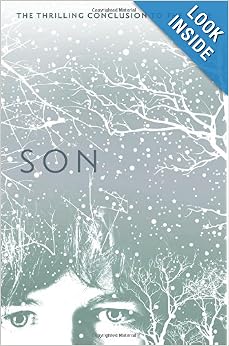
Son a Disappointment

Unless you are an avid book lover you just might think this post is going to be about a naughty child of mine.  Fortunately, my disappointment is not in a child, but in the most recent installment of Lois Lowry's series that started with Newbery-Award-Winning The Giver.
The Giver is a simply wonderful piece of dystopian literature for young teens (although I very much enjoyed it both times I read it as an adult) which was followed up by the less memorable Gathering Blue and thought-provoking The Messenger (my review here).  I was pretty excited when I heard she had released another book last fall, but I somehow didn't get around to reading it until last week.

Don't you just hate it when you anticipate something for a year and then it falls flat?

Son, this fourth book in the series, seems to exist merely to wrap up a few loose ends from the previous books.  It was an interesting idea to revisit Jonas's village and Gabe's story from the perspective of Gabe's birthmother, and it started out pretty well (even though I felt like I was reading the same story again only from a different perspective), but then she just seemed to randomly revisit all the old characters and try to connect them together while giving the reader a peek into "where they are now."  The confrontation with the Trademaster was particularly jarring and contrived, I thought.

Really, I think she could have just summarized this book with "and they all lived happily ever after."

Except that is inconsistent with the characters and world Lowry introduced us to.  The previous books were filled with richly developed characters and comprehensively described societies.  They showed us that the decisions we make have consequences, they taught us where true value lies, they reminded us to learn from the mistakes of the past--but these lessons were learned the hard way.  As nice as it might be to hope for a "happily ever after", Lowry had previously illustrated that we are human and there simply is no fairy-tale-ending on this earth.  I was disappointed in her betrayal of the society she had so eloquently created.  I think it was better to leave the reader wondering and caring about the characters than to try to wrap everything up and tie a pretty bow on top.